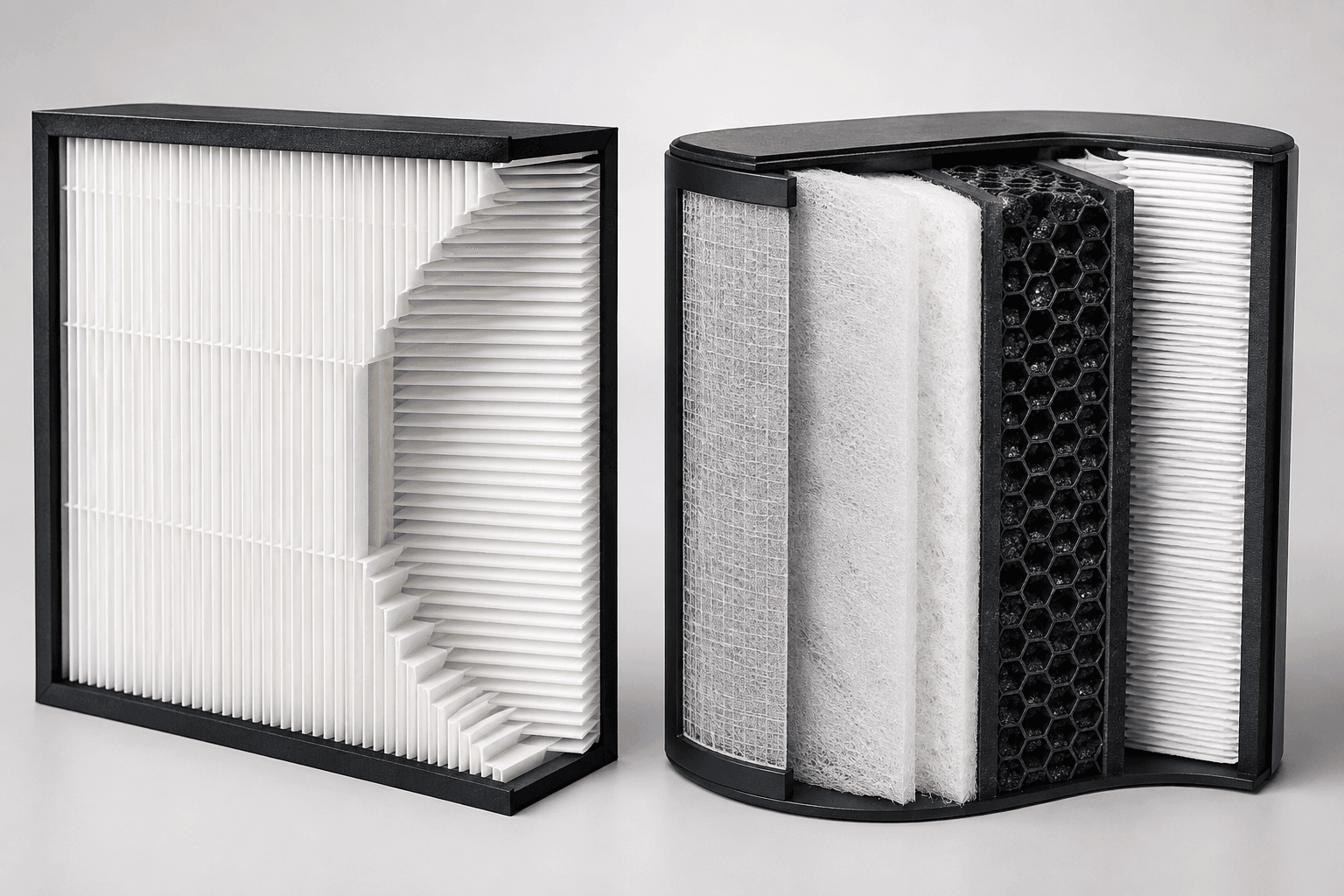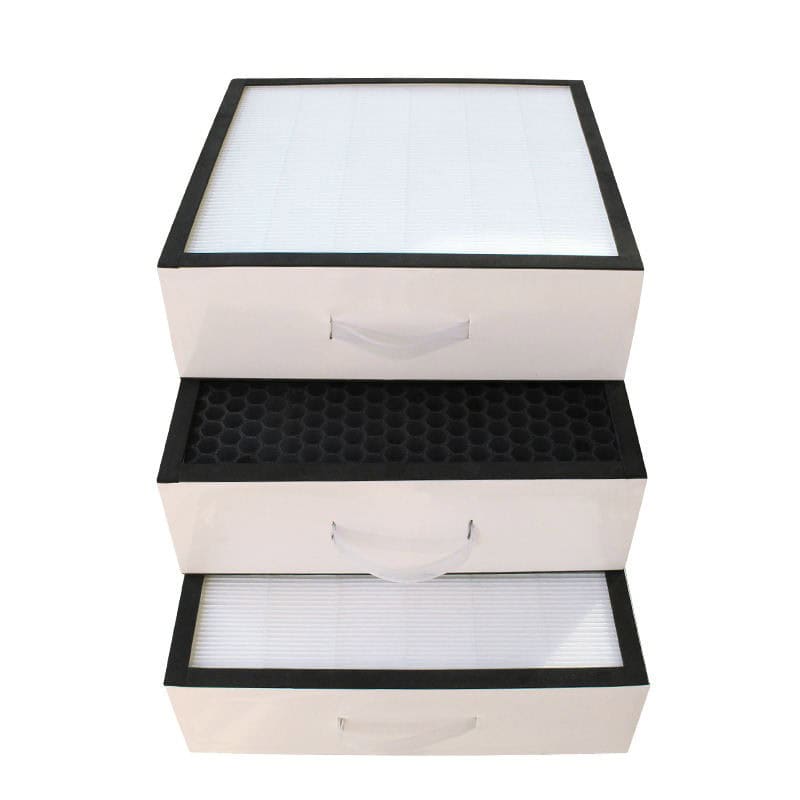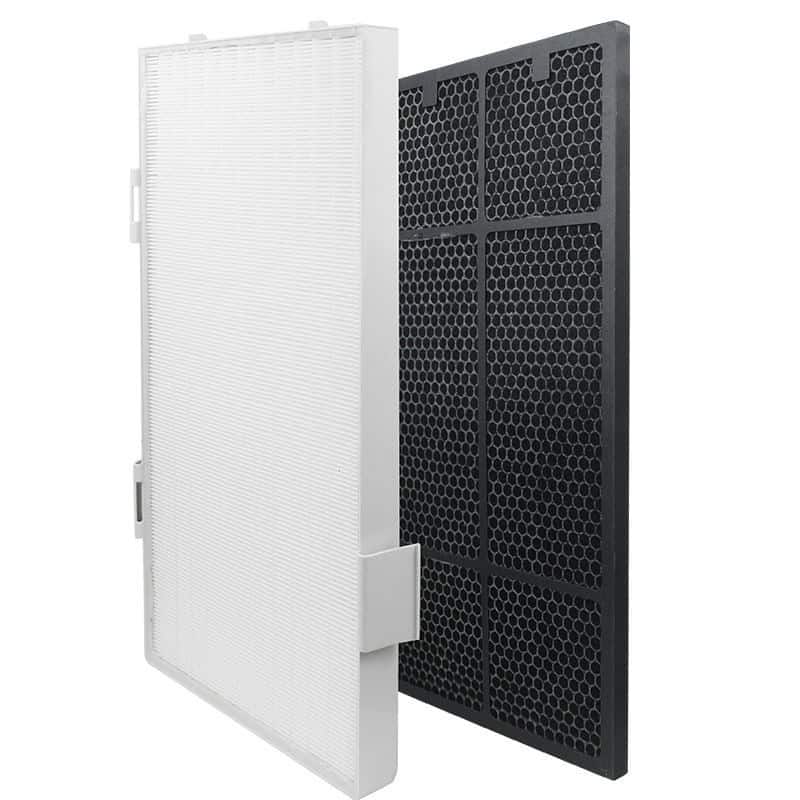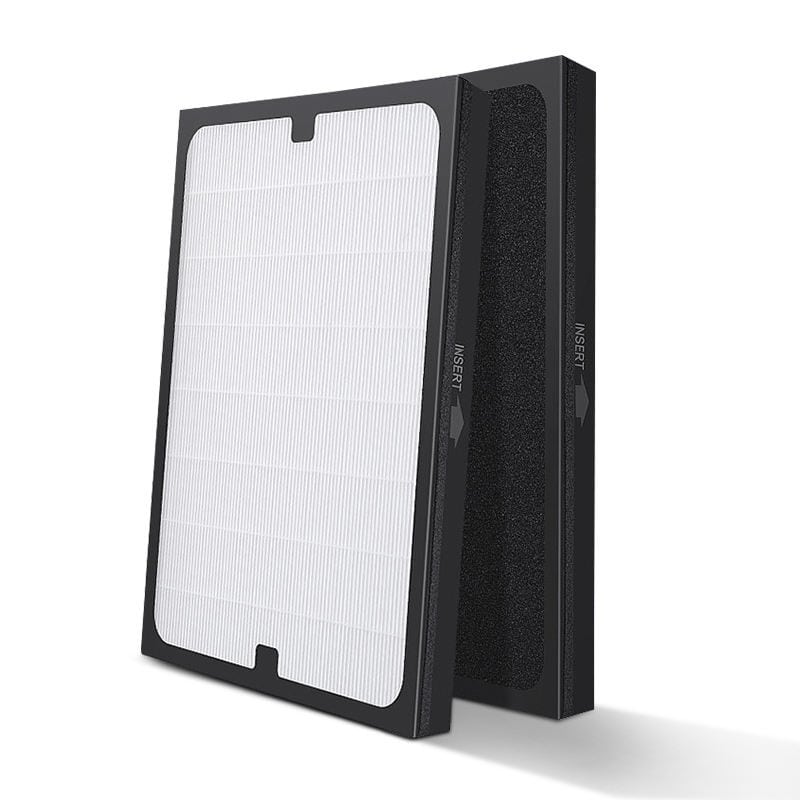

The sample that passed lab testing isn’t automatically the same as the ten thousand units that ship six months later. Media suppliers change lot chemistry slightly. Line operators change. Environmental conditions in the factory shift with the seasons. None of that shows up on the original qualification report you approved before the first production run. That gap is exactly why batch testing exists. “We tested it once” is not the same claim as “every batch performs like the sample did.”
What Batch Testing Actually Checks
A production batch test isn’t a repeat of the full qualification process. It’s a narrower check, run against every lot or every unit depending on the grade. It confirms that the batch still matches the baseline the original test established. Three things typically get checked.
An aerosol challenge test, using PAO or DOP, confirms filtration efficiency. It checks whether the batch still hits its rated efficiency at the relevant particle size. A separate check measures pressure drop at rated airflow. This matters because a media or gasket change can quietly shift airflow resistance. The efficiency number can still look fine even when that happens. Inspectors also check dimensional and seal integrity against tolerance. That covers frame dimensions, gasket compression, and any locating features that affect fit in your housing.
Why Testing Frequency Depends on Grade
This is where a lot of confusion comes from, because the testing requirement genuinely changes above H12.
For H13 and H14, EN 1822 requires individual, per-unit efficiency and local testing. Every single filter gets its own test result and serial number, not just the batch as a whole. That’s a meaningful cost driver in H13/H14 pricing. It’s also your strongest guarantee. A supplier who can’t produce a serial-numbered result for your specific unit isn’t meeting the standard for that grade.
Below H13, in the EPA range and most general-purpose filtration, testing typically follows a statistical sampling plan. It doesn’t test every single unit. Sampling frameworks like ANSI/ASQ Z1.4, related to ISO 2859-1, define how many units to pull from a given lot size. They also define what defect rate triggers a batch rejection. It’s a reasonable, industry-standard approach for lower grades. Testing every unit would cost more than the risk justifies.
If you’re not sure which grade your product needs, our grade comparison guide is a useful starting point. Check it before you set expectations around testing frequency.
How Sampling Plans Actually Work, in Plain Terms
If your grade falls into sampling-based testing rather than 100% unit testing, it helps to understand how that sampling works. That way, a supplier’s testing plan doesn’t sound arbitrary. ANSI/ASQ Z1.4 sampling works off two inputs. The first is your lot size, meaning how many units are in the batch. The second is an Acceptable Quality Limit, or AQL, the defect rate a batch can have while still passing. A tighter AQL typically applies to safety-relevant defects. It tolerates fewer defects and requires pulling more units for inspection relative to the batch size. A looser AQL, more typical for minor cosmetic issues, allows a smaller sample to represent the whole lot.
In practice, a 5,000-unit batch doesn’t need testing on all 5,000 units to give a statistically sound confidence level. Testing a properly drawn sample of a few hundred units against an appropriate AQL does the job. It tells you what you need to know about the batch as a whole. What matters for you as a buyer isn’t memorizing the sampling math. It’s confirming which AQL level your supplier applies. Make sure it’s tighter for safety and performance defects than for purely cosmetic ones.
Is 100% Testing Always Better Than Sampling
Not necessarily, and not always practical, below H13. Full unit testing adds cost and time that isn’t proportional to the risk involved for lower-efficiency grades. It’s the right approach where the standard requires it, for H13 and H14 filters. It also fits where your application has zero tolerance for variability.
What a Real Batch Record Looks Like
A batch test result worth trusting includes several things. First, a lot or batch number that ties back to physical inventory you can trace. Second, the specific test date, not just a reference to the original qualification date. Third, both efficiency and pressure drop figures, not efficiency alone. For H13 and H14 filters, it also includes individual unit serial numbers linked to scan test data. That’s different from a single averaged number applied to the whole batch. A fuller audit trail adds the name of the technician or lab responsible and the equipment calibration status.
A “Certificate of Conformance” that just restates your PO number and says “meets spec” is a compliance formality. It isn’t evidence unless it includes the details above. It’s worth asking directly whether the CoC you receive reflects actual measured data for that shipment. Or is it simply a templated document reused across orders? Our own quality control page walks through what a fully documented batch record looks like.
What If a Supplier Cannot Produce Batch Records
Treat missing batch records as a serious flag for future orders. Consider a third-party inspection on your next shipment while you evaluate whether to continue the relationship. A supplier unable to produce records after the fact likely wasn’t generating them in the first place. That matters more than any single batch’s actual performance.
Third-Party Verification, If You Want an Extra Layer
Some brands add an independent pre-shipment inspection before a container leaves the factory, through firms like SGS, Intertek, or QIMA. This matters most for a first order with a new supplier. It also matters for a high-volume reorder, where a bad batch reaching your warehouse would be costly. This isn’t necessary for every shipment once you’ve established trust. It’s a reasonable step, though, for validating a new supplier relationship or a first production run on a redesigned filter. Before extending that level of trust, it also helps to check a supplier’s certification and audit history directly. Our own company background page is one example of the kind of documentation worth asking for.
Building Testing Requirements Into Your Supplier Agreement
Rather than assuming batch testing happens a certain way, put it in writing as part of your purchase agreement. Spell out the required testing frequency: full testing for H13/H14, or a sampling plan and AQL for lower grades. Also spell out which specific data points must appear in every batch record you receive. Set a defect rate threshold that triggers automatic notification, not just rejection after the fact. Also establish your right to request raw test data or scan charts, instead of a pass or fail summary alone.
How Often Should Re-Qualification Testing Happen
Trigger it around events, not just a calendar date. A change in media supplier or lot is a reasonable trigger for a full re-qualification. So is a tooling modification, or a gap in production of several months. Don’t rely solely on routine batch checks.
Making Sense of a Scan Test Chart
If you request raw data rather than a pass/fail summary, you’ll likely receive a scan test chart. This is a grid or heat-map style readout. It shows efficiency at many points across the filter face, rather than a single averaged number. What you’re looking for isn’t perfection at every point; some minor variation is normal. What matters is whether any point drops meaningfully below the rest of the chart. That kind of dip signals a localized weak spot, exactly the kind of defect an averaged number would hide. You don’t need to be a filtration engineer to read this usefully. Ask your supplier to flag the lowest-performing point on the chart. Have them explain whether it still clears the local requirement for your grade, with margin or right at the edge.
How We Handle This
We check every batch we ship against EN 1822 efficiency testing before it leaves the factory. That happens under an ISO 9001 quality system that’s been running the same way for over a decade. If batch consistency is a specific concern for your program, tell us your requirements directly. That could be a prior bad experience with another supplier, or a retailer requiring documented traceability. We’ll structure the testing and reporting around what you actually need to see.