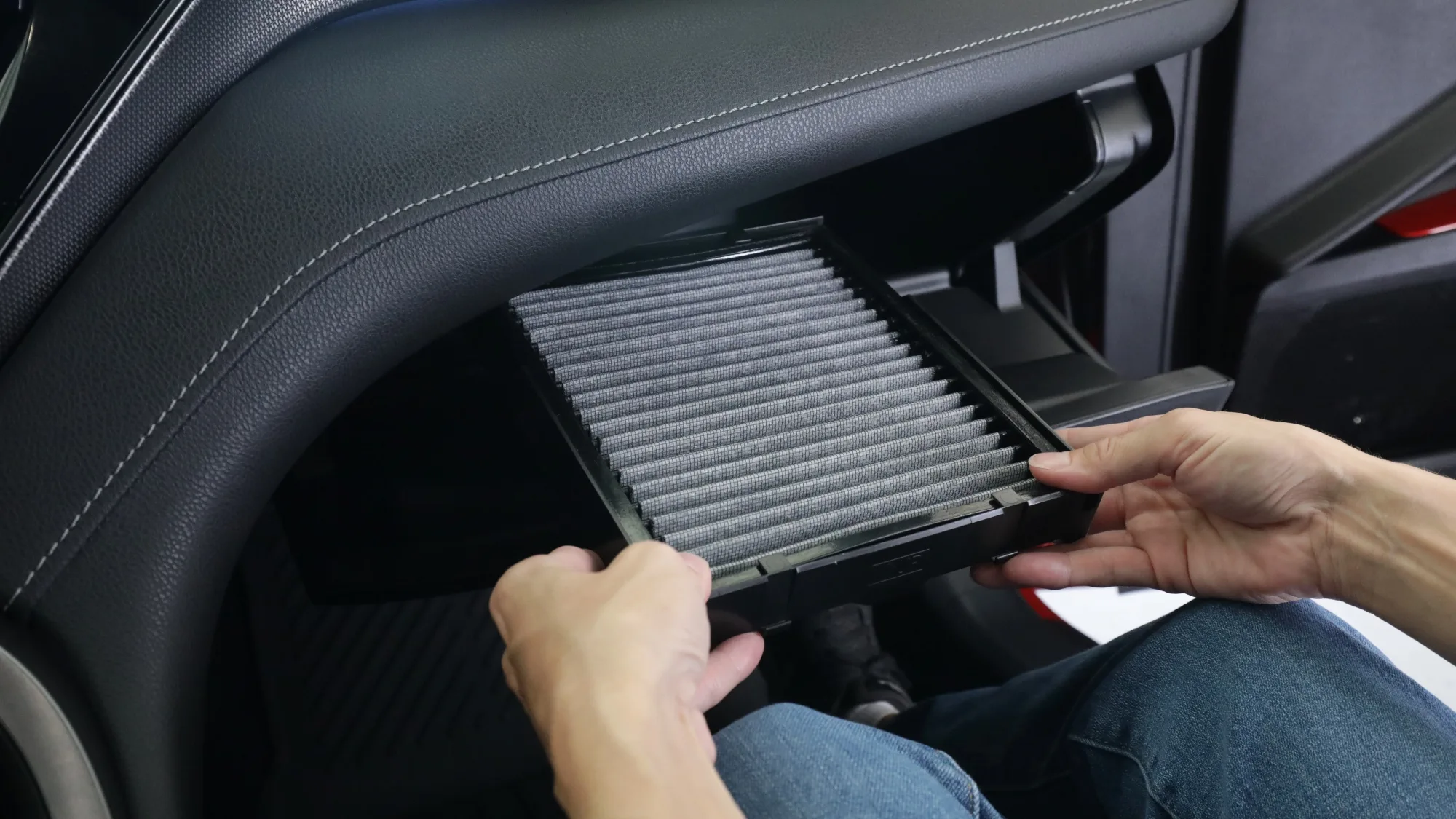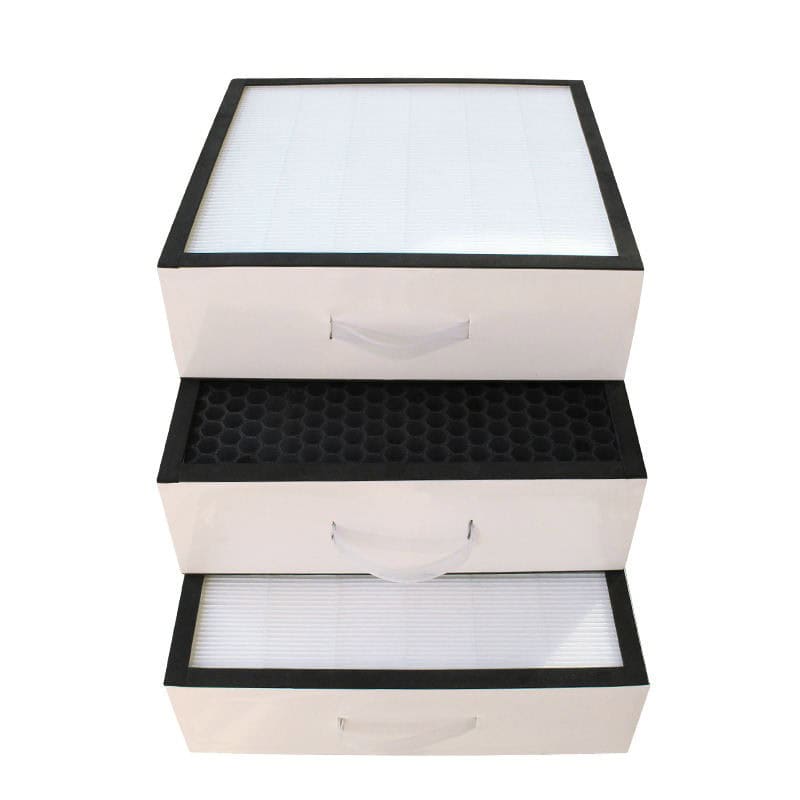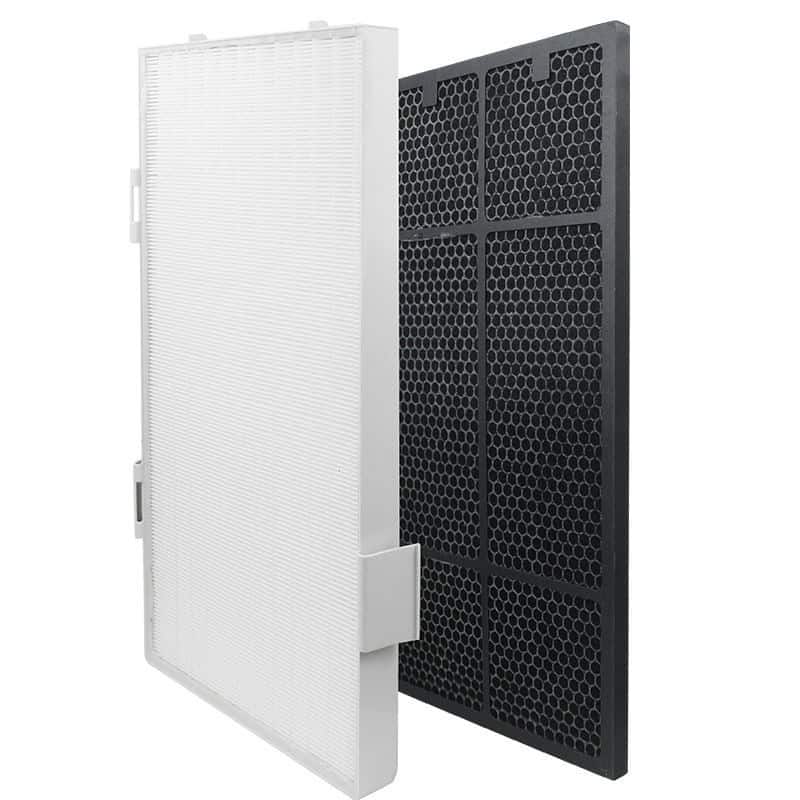

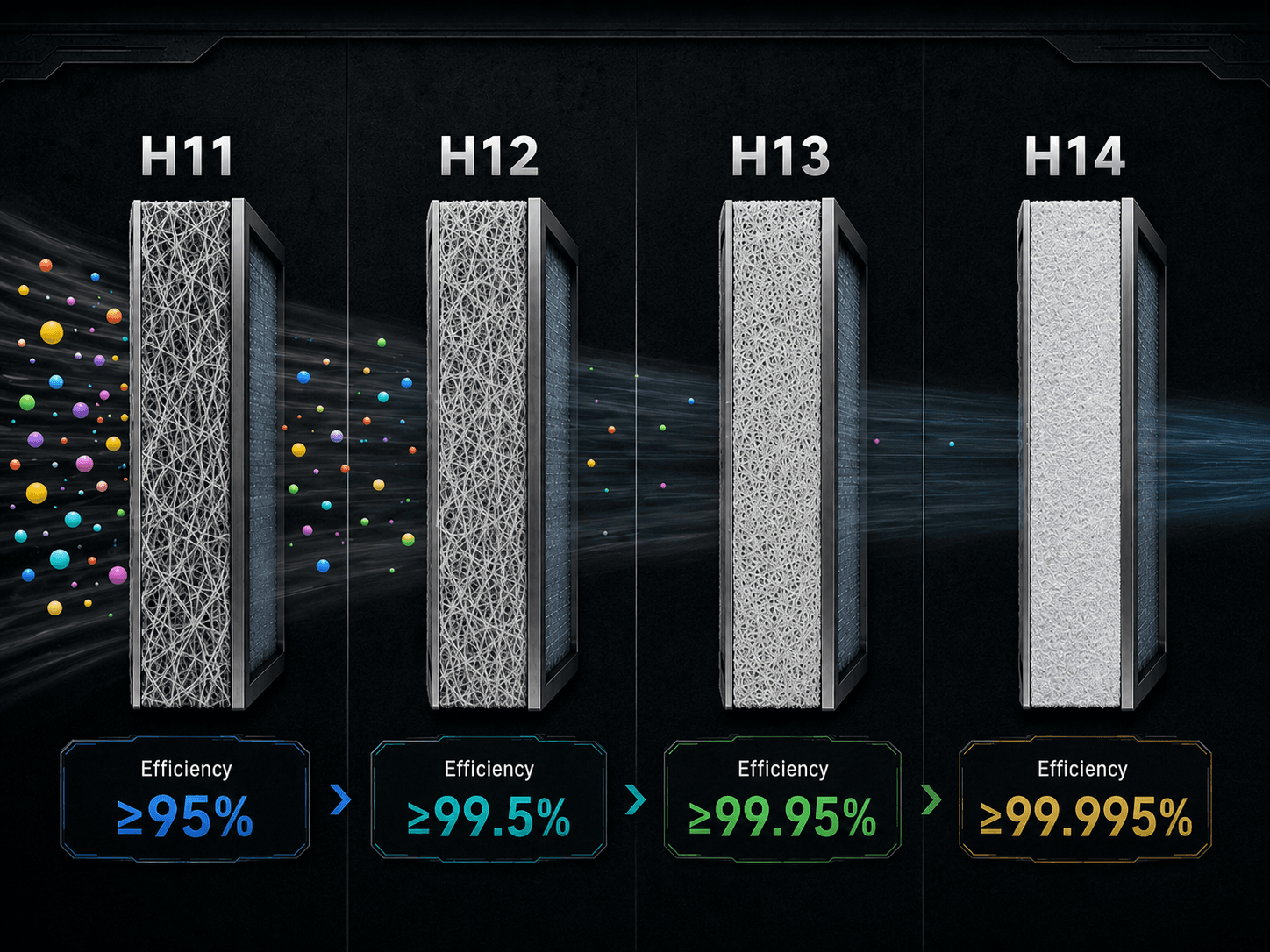
H11, H12, H13, and H14 are not a quality ladder. They are a specificity ladder. The right grade depends on what is actually floating in your air, not what sounds most impressive on a product page.
What EN 1822 HEPA Filter Classification Actually Measures
Every grade in this range is defined by EN 1822-1:2019, the European standard for high-efficiency air filters, adopted internationally under ISO 29463. The test does not measure how fresh a room feels afterward. It measures the filtration efficiency for particles with the largest penetrating size, which are the most difficult for any filter medium to capture.
This makes EN 1822 a stricter benchmark than the older US convention of measuring efficiency only at 0.3 microns. A filter that passes EN 1822 has been challenged at the exact size it is least equipped to stop.
Here is where each grade lands:
| Grade | Overall Efficiency | Local Efficiency |
|---|---|---|
| H11 | ≥ 95.00% | ≥ 97.50% |
| H12 | ≥ 99.50% | ≥ 99.75% |
| H13 | ≥ 99.95% | ≥ 99.975% |
| H14 | ≥ 99.995% | ≥ 99.9975% |
That gap between H11 and H13 — 95% versus 99.95% — sounds like a rounding error. It is not. Feed 100,000 particles into each filter: H11 lets through 5,000. H13 lets through 50.
Why H11 HEPA Filters Work for Most Home Air Purifiers
H11 captures at least 95% of particles at MPPS. In everyday terms, it handles dust, pollen, pet dander, and most mold spores without issue. Where it falls short is ultrafine particles below 0.3 microns — and viral aerosols, which tend to cluster in that range.
For general home use in areas with moderate air quality challenges — seasonal pollen, urban dust, pet households — H11 is a practical and cost-effective choice. The lower fiber density also means less airflow restriction, which matters when fan power is a real monthly operating cost.
HIFINE manufactures H11 True HEPA filter media in OEM and ODM formats, with EN 1822-tested media and ISO 9001-certified production — for brands that need consistent filter performance at scale.
What H12 HEPA Filters Offer That H11 Cannot
H12 captures at least 99.5% at MPPS. It rarely appears in marketing materials because it sits between the “good enough” story of H11 and the “medical-grade” story of H13. That gap in positioning is mostly commercial, not technical.
For households with mild to moderate allergies, H12 delivers meaningful improvement over H11 — at lower cost, weight, and airflow resistance than H13. It is also common in commercial HVAC pre-filtration stages, where installing H13 would reduce airflow to an unusable level.
If you are between H11 and H13 and the price difference matters, H12 is the grade worth pricing out.
When H13 HEPA Filtration Becomes a Health Requirement
H13 captures at least 99.95% of particles at MPPS. This is the grade referenced in most clean-room, hospital, and pharmaceutical filtration specifications. The WHO’s 2021 guidelines on airborne infection control cite HEPA filtration — and H13 is the practical lower limit for those applications.
For residential use, H13 is the appropriate choice when someone in the household is immunocompromised, recovering from respiratory illness, or living with severe asthma triggered by fine particulates.
How H13 HEPA Filter Efficiency Protects Against Viral Aerosols
Research published in Environmental Science & Technology measured respiratory aerosol particle sizes at 0.1–1 micron — the exact MPPS range where H11 and H12 leave a measurable gap. H13’s 99.95% overall efficiency means that for every 100,000 viral aerosol particles introduced, fewer than 50 pass through the media. At H11’s 95% rate, that number rises to 5,000.
The trade-off is real: H13 restricts airflow more than H11 or H12. If the air purifier motor is not sized for higher static pressure, effective CADR drops. Spec-match the filter grade to the device, not just to the threat.
Why H14 HEPA Belongs in Clean Rooms, Not Living Rooms
H14 captures at least 99.995% at MPPS. This grade belongs in semiconductor fabrication, pharmaceutical fill-and-finish lines, and ISO Class 5 clean rooms. For residential air purifiers, the practical benefit over H13 is marginal in an unsealed room.
The case for H14 at home is narrow: a controlled sterile environment for an immunocompromised patient, or specific small-volume laboratory conditions. In most living spaces, H13 already puts you at 99.95% capture — the additional 0.045% retained by H14 does not produce a measurable health outcome when air re-enters through door gaps and HVAC returns.
For a closer look at how H13 and H14 behave inside real air purifier units, see What Is a True HEPA Filter — H13 vs H14.
How to Choose the Right HEPA Filter Grade for Your Air Quality Risk
The question is never “which number is highest.” It is “what particle am I actually trying to stop?”
Dust, pollen, pet dander: H11 or H12. These particles are large enough that H11 handles them reliably. The H13 airflow penalty is not justified by the threat level.
Urban PM2.5, smoke, mold spores: H12 or H13. Fine combustion particles and mold spores sit below 1 micron. For wildfire smoke or dense city air, H13’s efficiency matters.
Viral aerosols, bacteria: H13 minimum. Respiratory aerosols cluster at 0.1–1 micron. This is exactly the MPPS range where H11 and H12 leave a gap.
Clean rooms, pharmaceutical environments : H14. Correct for ISO-class environments. Rarely the right tool for a home living room.
Why HEPA Filter Media Quality Determines Whether the Grade Is Real
Grade ratings apply to the filter media itself, not automatically to the assembled filter unit. A product sold as “H13” can underperform if the frame seal leaks or if the media is not consistently manufactured to EN 1822 test conditions.
Filter media quality is set at production, not at the final product stage. Brands sourcing OEM filter components should verify that media suppliers test to EN 1822 at the media level — before assembly — not only on finished units. That is the point in the supply chain where grade consistency is either built in or lost.