
There is a widely held assumption about window air conditioners: running one on a hot day also filters the indoor air. For the particles that actually drive respiratory problems, that assumption is almost entirely wrong.
The mesh pre-filter shipped with most window ACs serves one primary purpose keeping debris off the evaporator coils. It does that job reliably. What it does not do is meaningfully reduce the fine particulate matter, pollen, mold spores, or volatile organic compounds that the EPA and ASHRAE identify as the leading causes of degraded indoor air quality.
Understanding that distinction changes how you approach filter maintenance and opens up a straightforward fix that most guides never mention.
What the Standard Window AC Mesh Filter Actually Captures
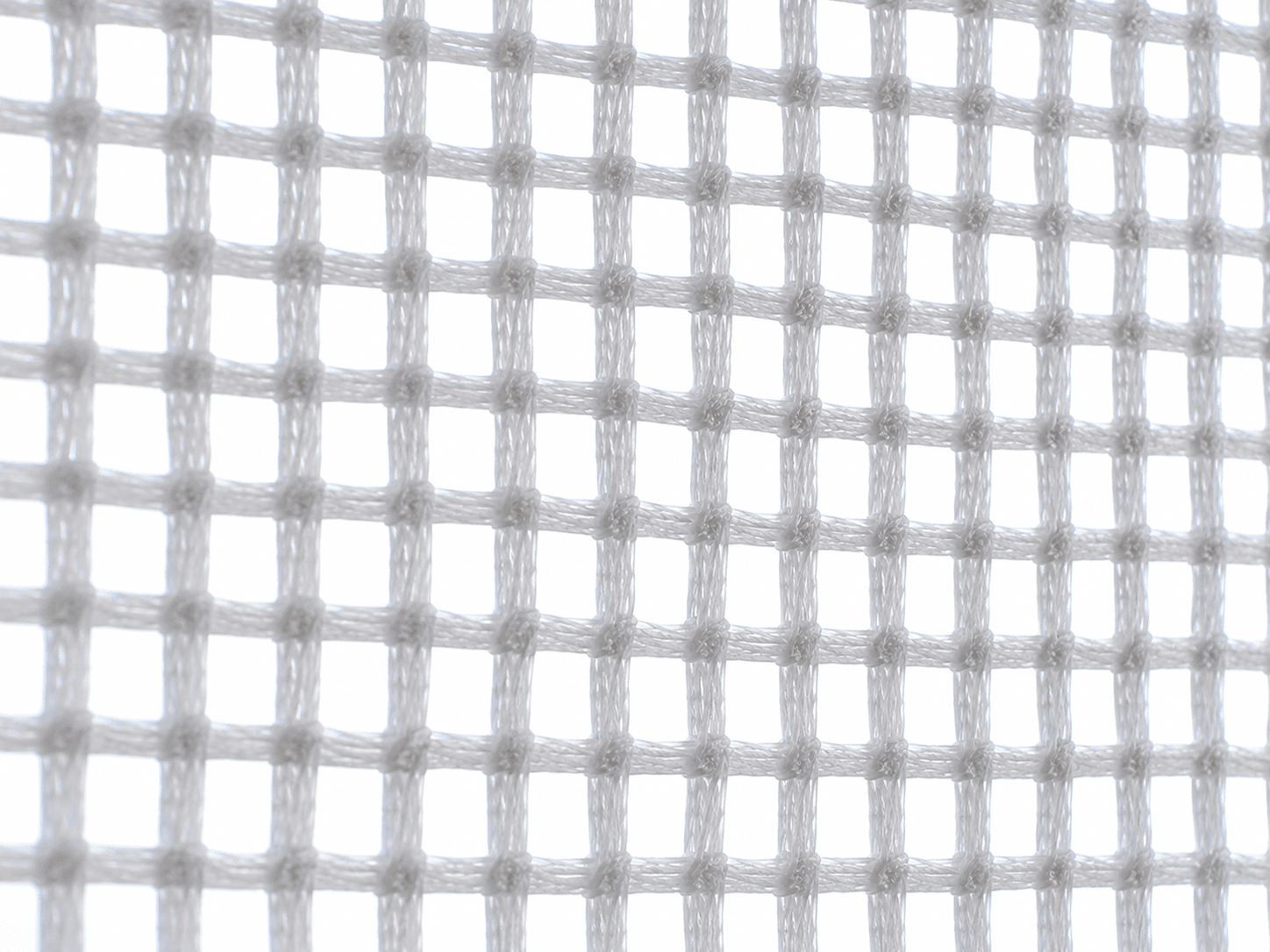
The plastic mesh pre-filter in a typical window air conditioner performs at roughly MERV 1 to MERV 4 the lowest tier of the ASHRAE 52.2 rating scale. At that efficiency level, the filter captures particles larger than 10 microns: visible dust, lint, pet hair, and coarse debris. The machine’s coils stay clean. That is the design intent, and it works.
The particles that affect human health are considerably smaller and require a different class of filtration entirely:
- PM2.5: 2.5 microns and below. The EPA designates PM2.5 as the primary air quality indicator tied to cardiovascular and respiratory disease. A standard mesh filter does not touch it.
- Mold spores: 3 to 40 microns. The smaller, more allergenic end of that range passes through mesh freely.
- Fine pollen: 10 to 100 microns. Coarser pollen gets caught. The fragments that trigger reactions do not.
- VOCs: gas-phase molecules. No mesh filter removes them. Activated carbon is required.
This is not a product defect. It is a design priority: coil protection, not air cleaning. The distinction matters because the fix is different from what most maintenance guides suggest.
How to Add Real Air Filtration to a Window AC
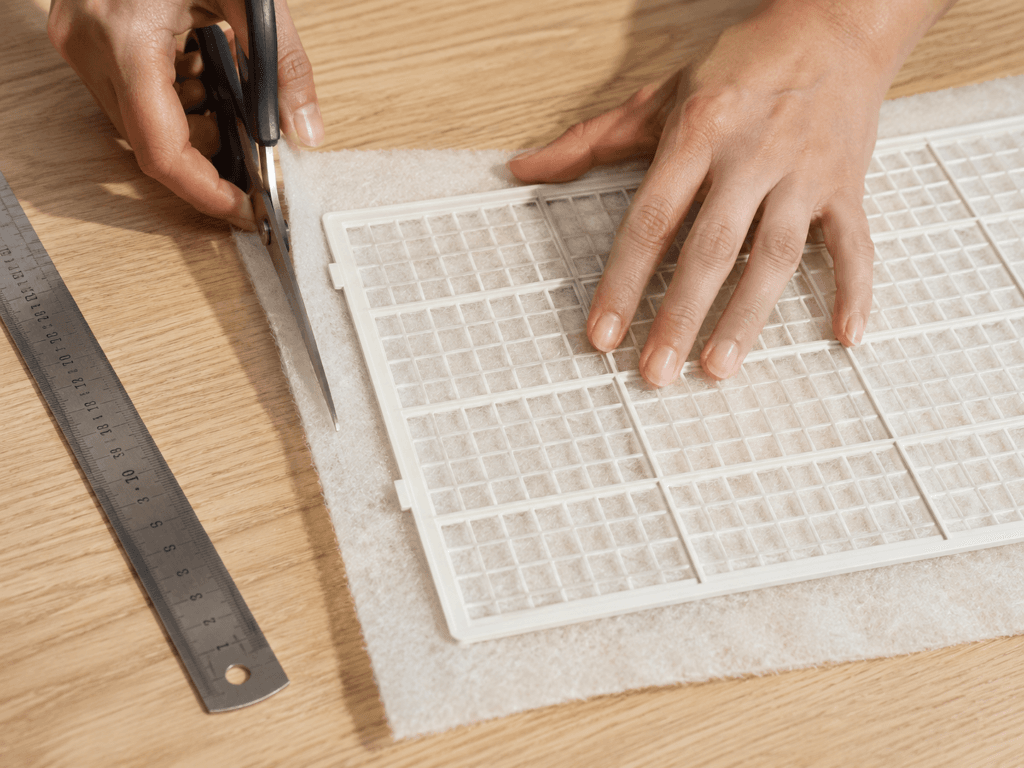
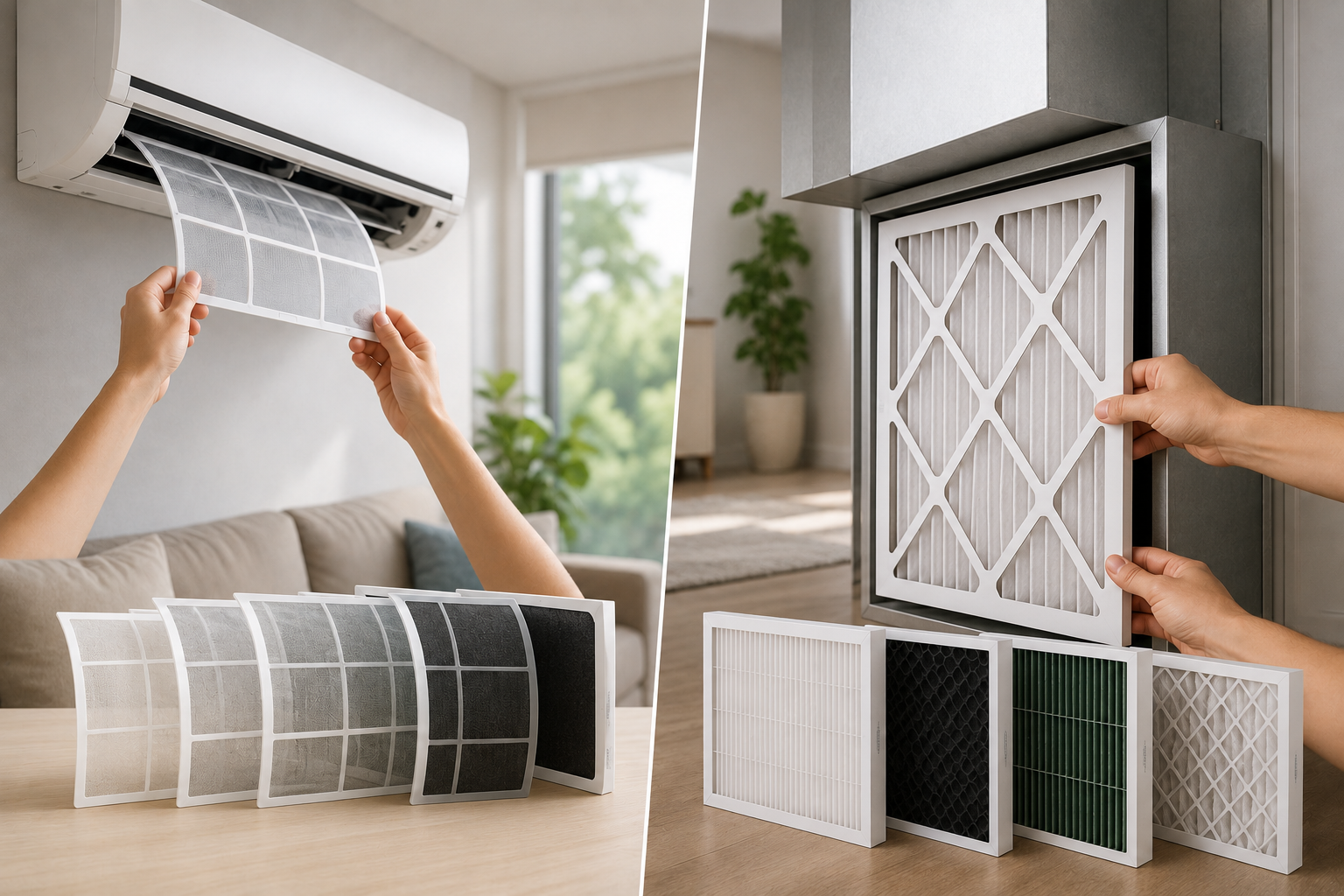
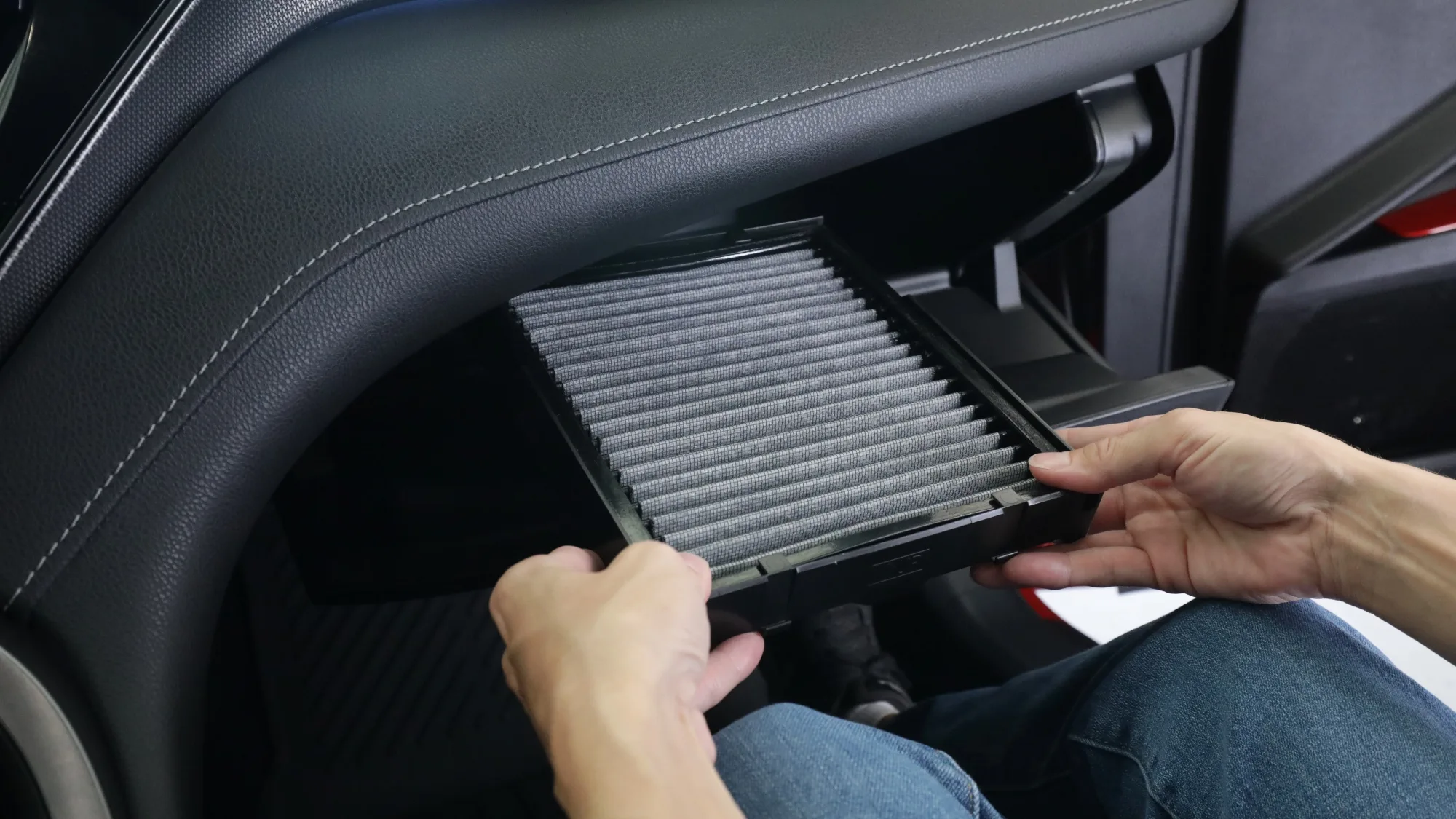
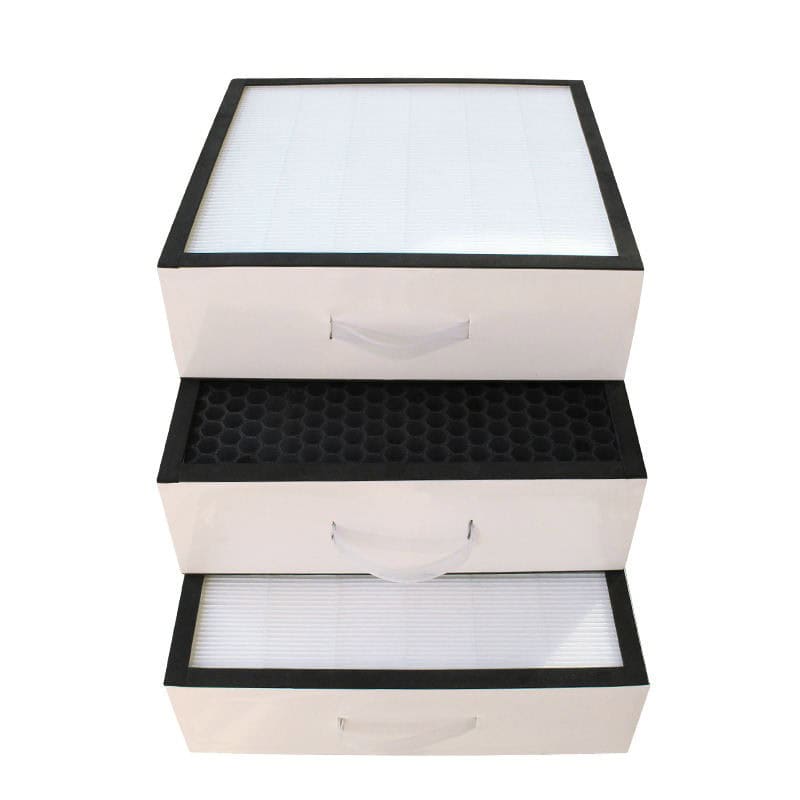
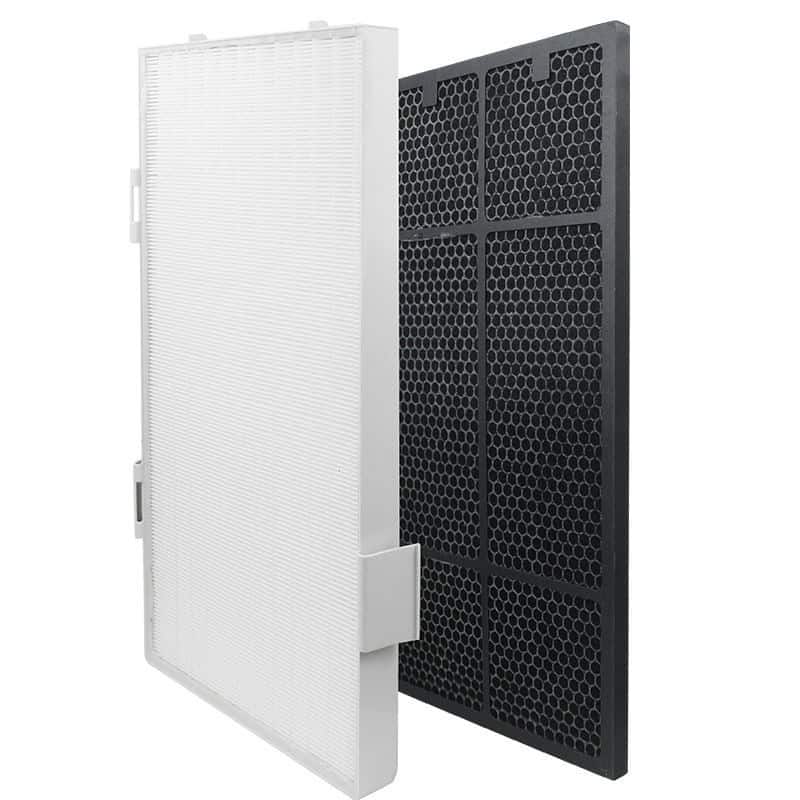
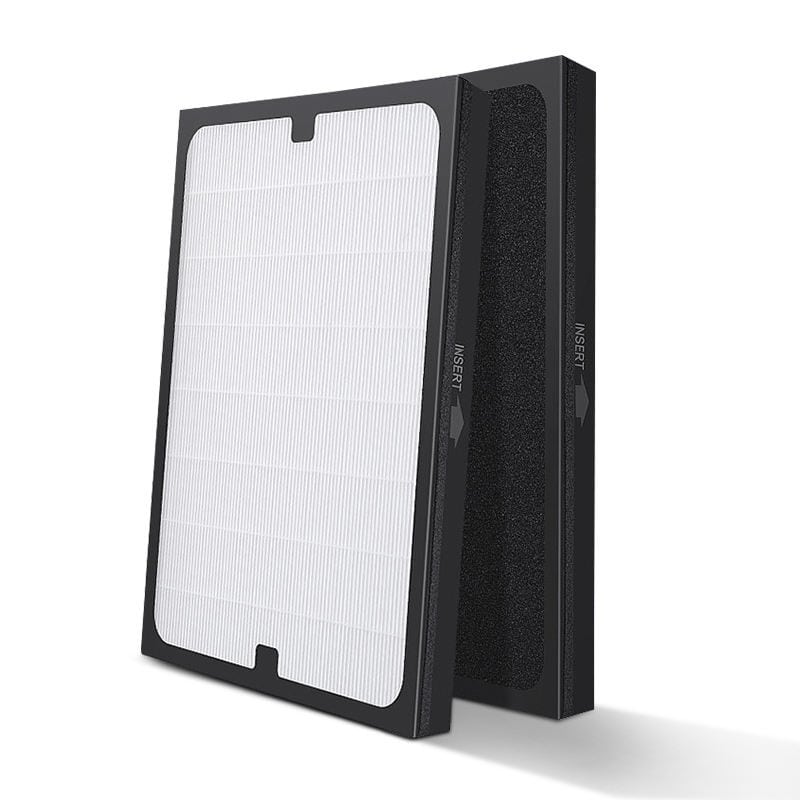
Most window-type air conditioners are equipped with a filter compartment deep enough to accommodate a thin filter panel directly behind the mesh pre-filter. Aftermarket filter media cut to fit the existing filter frame dimensions can be installed in this compartment, enabling the unit to truly help improve air quality rather than merely protecting the coils.
Choosing the right MERV rating:
MERV 5 to MERV 8 is the appropriate range for window AC applications. Higher MERV ratings restrict airflow more than the compact fan motor in a window unit is built to handle, which strains the motor and reduces cooling efficiency.
At MERV 7 to 8, the filter captures particles down to 3 microns covering most mold spores, dust mite debris, and medium pollen. A meaningful, measurable step up from bare mesh alone.
How to install the media insert:
- Unplug the unit and remove the front panel.
- Slide out the mesh pre-filter. Trace its frame onto the media material and cut to size.
- Slide the media panel into the filter slot, fibrous side facing incoming air.
- Replace the mesh pre-filter in front of it; this mesh acts as a structural layer and pre-captures larger debris, thereby extending the service life of the filter media.
- Re-clip the front panel and restore power.
Because the media layer is now capturing particles the mesh previously let through, it will load faster. Plan to inspect it every 30 days and replace it every 60 to 90 days.
How to Maintain the Mesh Pre-Filter the Right Way
Even with a media insert in place, the mesh pre-filter still needs regular cleaning. A clogged mesh restricts airflow regardless of what sits behind it, and the media layer does not protect the coils from debris the way the mesh does.
- Unplug before opening any panel.
- Rinse the mesh under warm, low-pressure water. Mild dish soap handles oily residue. Avoid hot water it warps the plastic frame.
- Air dry for at least two hours before reinstalling. A damp filter raises moisture at the coil surface and accelerates mold growth.
When to Replace the Mesh Instead of Rinsing It
If the screen is torn, has a permanent gray cast that washing does not shift, or the frame is warped replace it. OEM mesh replacements for major window AC brands cost between $8 and $25. Aftermarket options cut to non-standard dimensions are also available. Please check our compatible replacement filters to see the available size options.
How Often to Replace Each Layer
The U.S. Department of Energy recommends checking window AC filters every 30 days during peak cooling season. That interval applies to the mesh pre-filter. For the media insert, 60 to 90 days is realistic for most households.
In homes with heavier indoor air loads gas stoves, wood-burning fireplaces, tobacco smoke, multiple pets, or high-output cooking setups including induction cookers used regularly for high-heat wok cooking shorten both intervals by 25 to 30 percent. The media insert is doing real work in those environments; it will show it.
According to the Department of Energy, maintaining filters on schedule is one of the highest-return actions for keeping air conditioner efficiency stable. A loaded filter forces the fan to work harder, which adds to energy consumption across a full cooling season independent of how well the compressor itself is running.
The truly crucial step
Installing fresh filter media while skipping coil cleaning is the most common reason window AC maintenance fails to improve air quality. Evaporator coils accumulate mold spores and bacteria over a cooling season. Without cleaning, those contaminants re-enter the airstream within days of a new filter going in traveling straight past both the media insert and the mesh, because they’re already inside the unit.
At the start of each cooling season, apply a no-rinse foaming coil cleaner to the evaporator coils before inserting fresh media. It adds about ten minutes to the job and prevents a clean filter from becoming a delivery system for last season’s biological growth.
Final Summary
The mesh pre-filter in your window AC is doing one thing well: keeping the coils clear. Keep it clean, and replace it when it wears out. But if you want the unit to actually improve the air in the room, the media insert is the step that makes it happen and it takes about five minutes to add on the first try.
If you need filter media cut to fit window-type air conditioners that comply with the EN 1822 standard, please contact us immediately. HIFINE is a filter media manufacturer, not a home appliance brand, which means its products focus on the filter media itself.