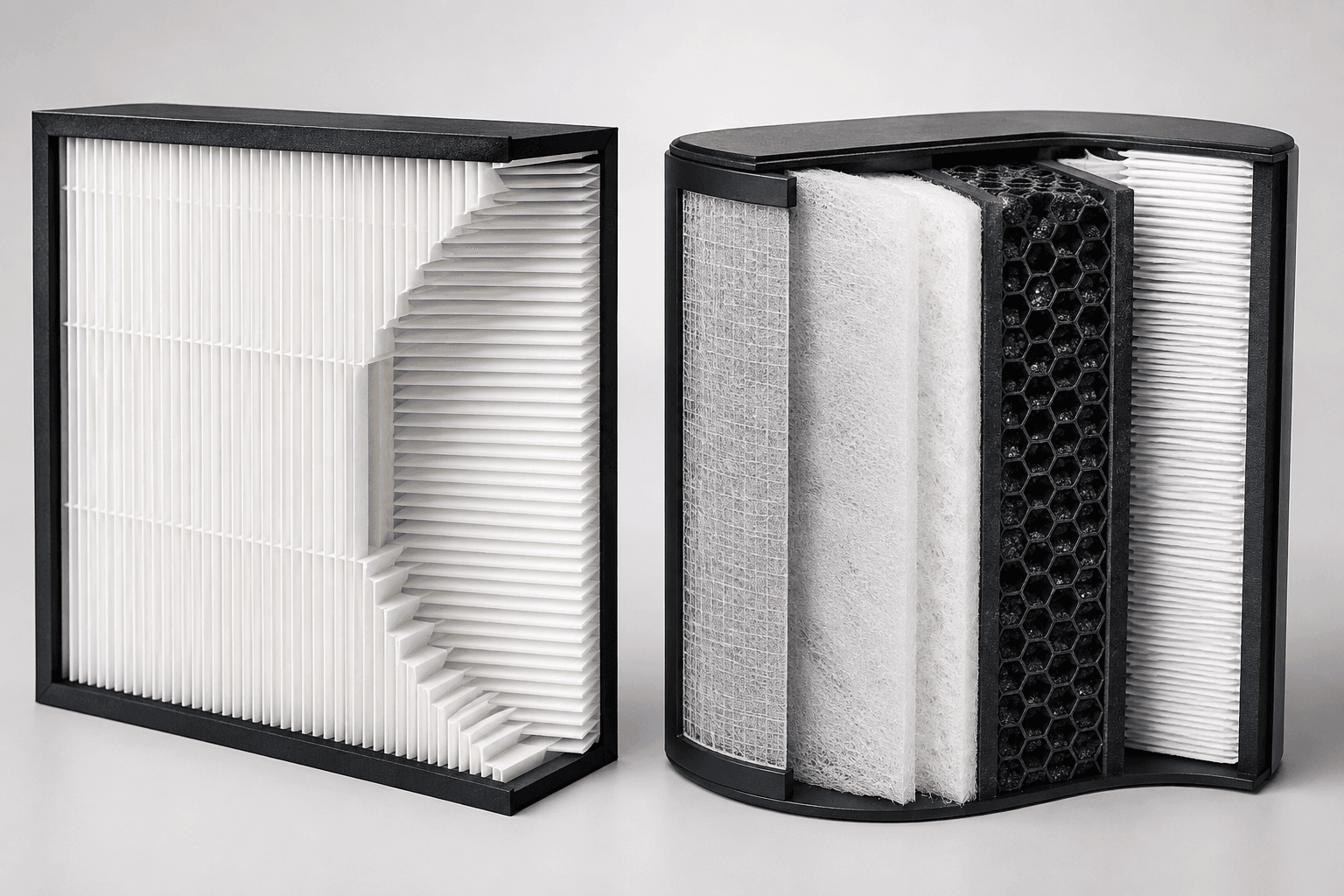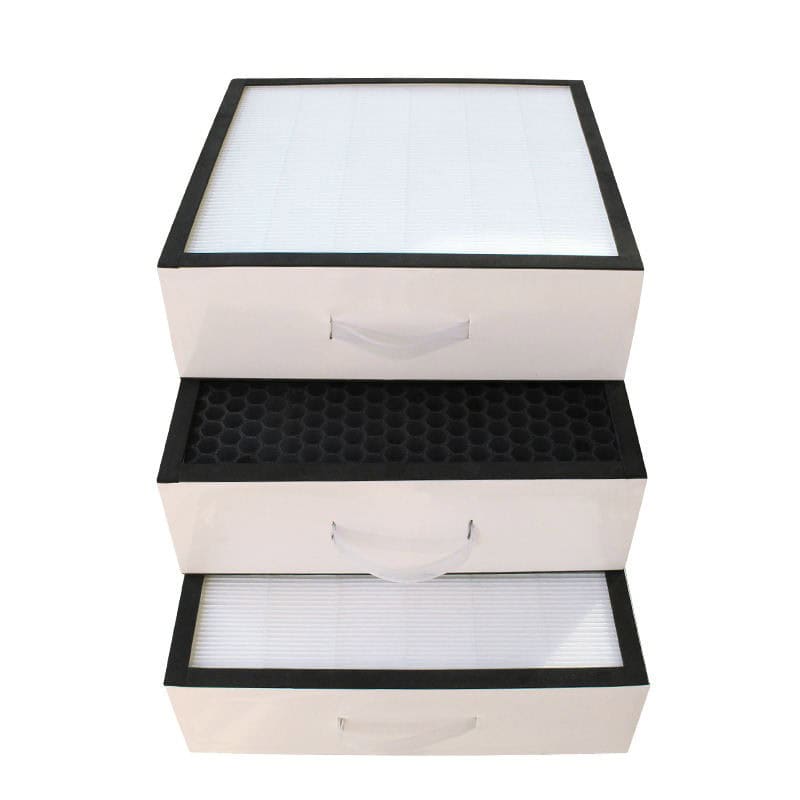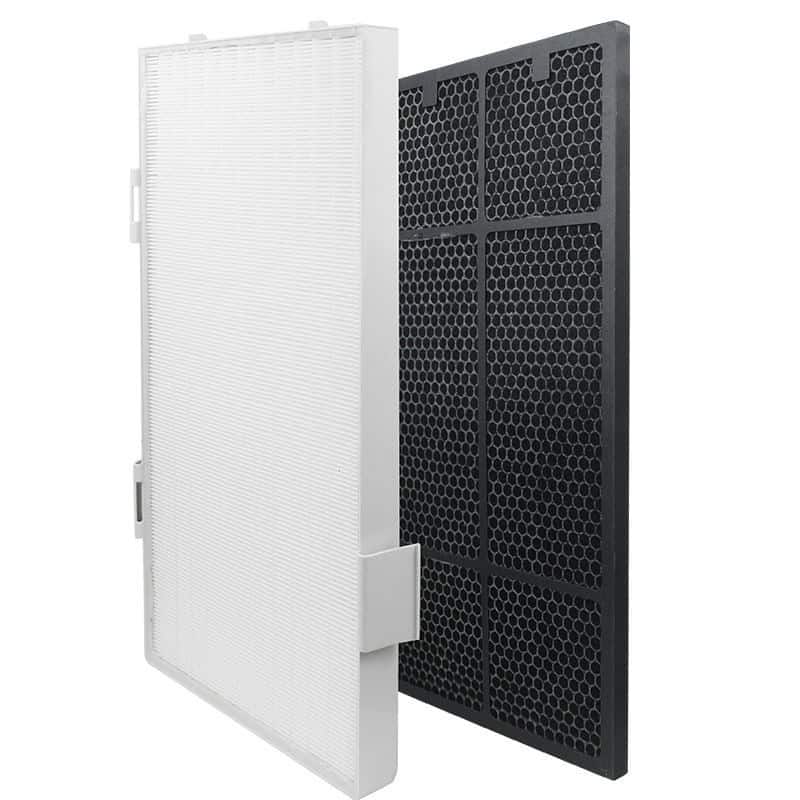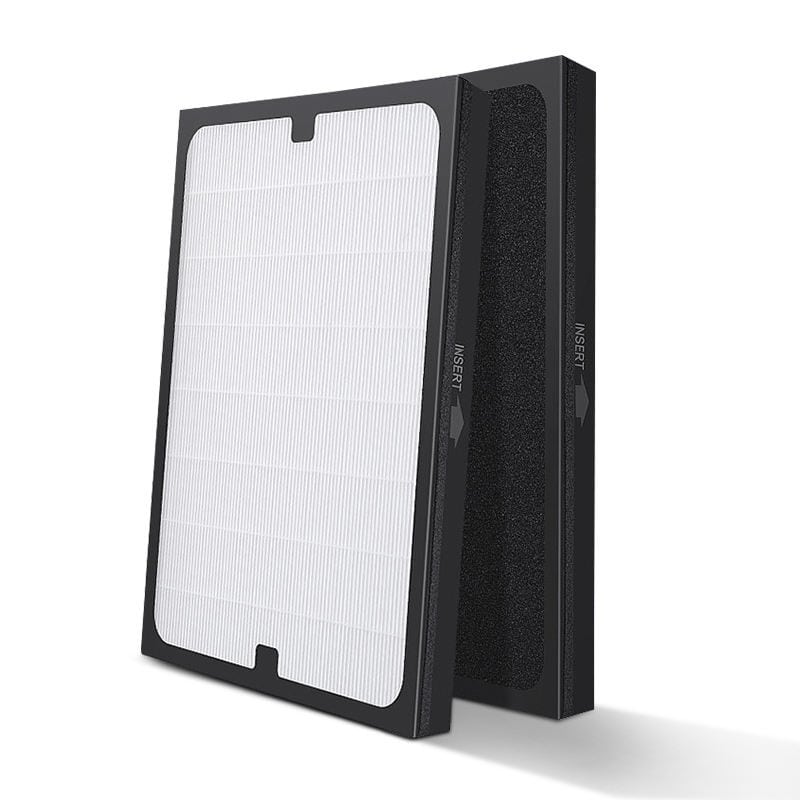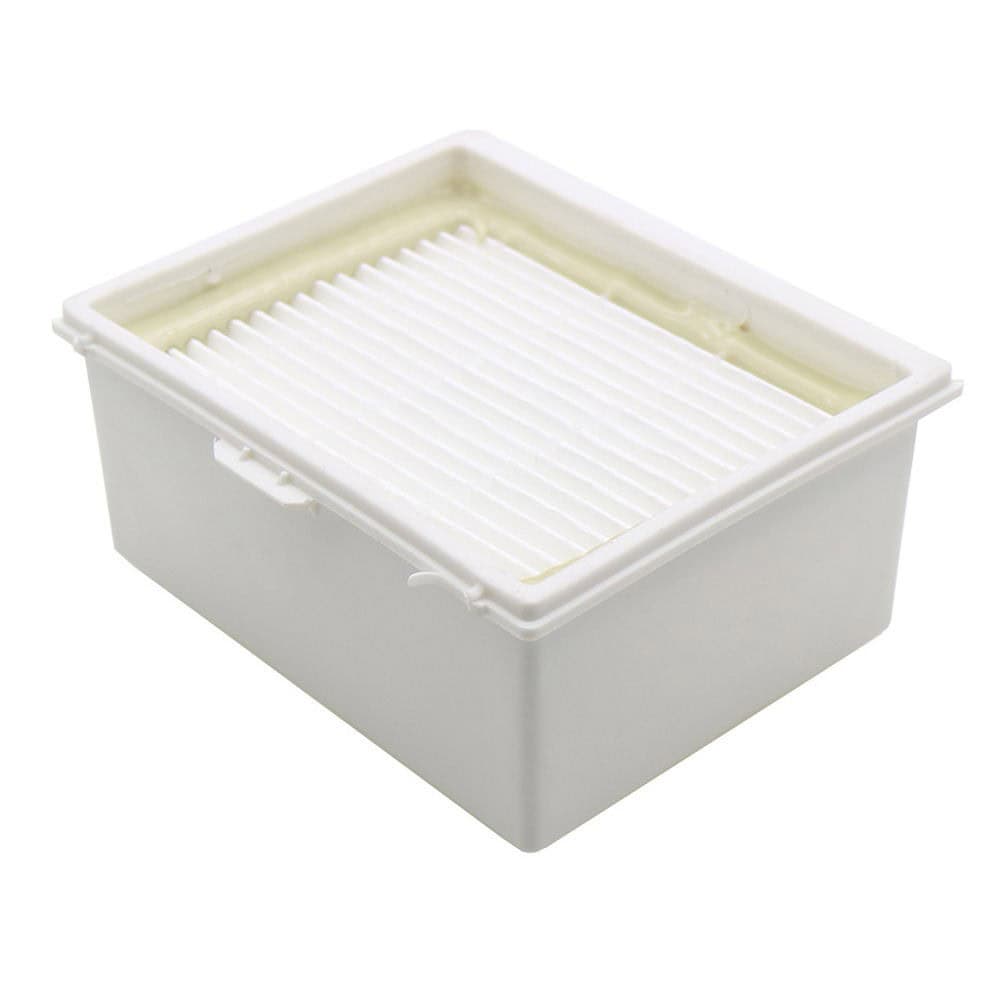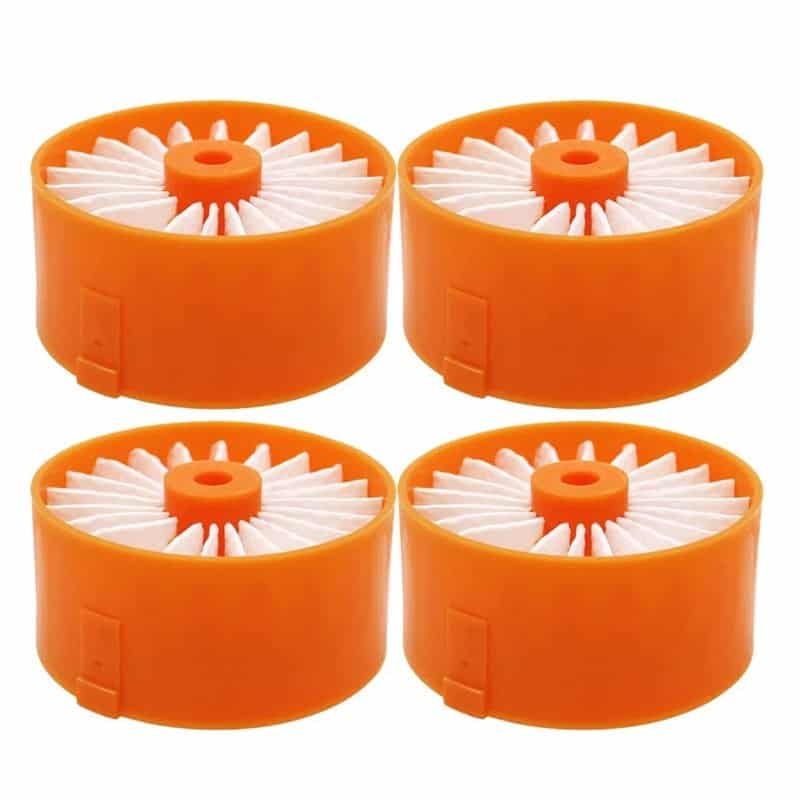
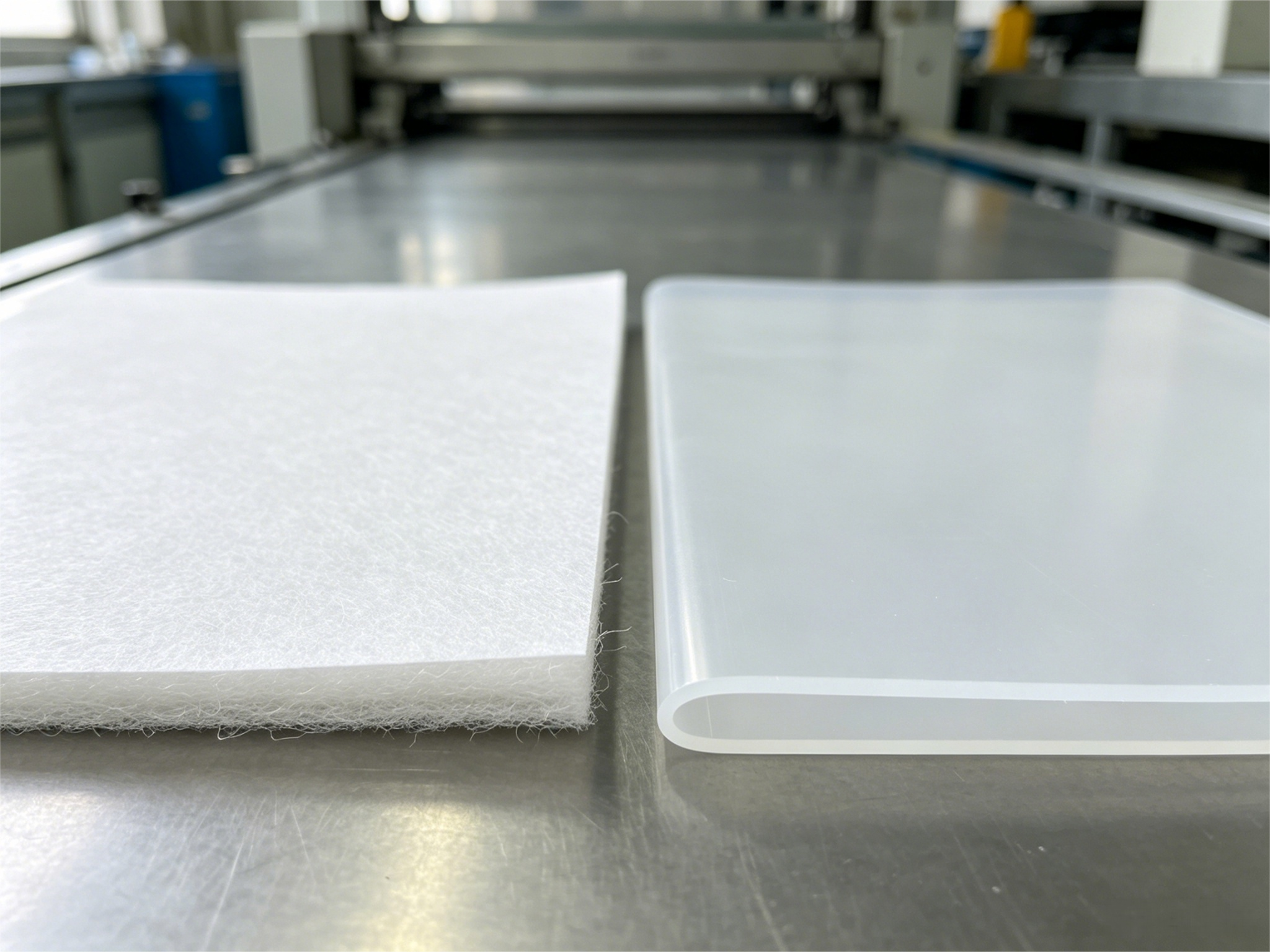
Most RFQs we receive start the same way. A buyer sends a spec sheet that says H13, a dimension, and a target price. They assume that once the efficiency grade is locked, the filter is basically defined.
However, it is not.
H13 only describes how well the finished filter catches particles at the most penetrating size. It says nothing about what the media is made of. And the material choice quietly controls four things your customers will actually complain about. How hard the fan has to work. How long the filter lasts. Whether it survives a damp environment. Whether it can be washed and reused.
For custom HEPA filter production, the real decision sits between two families of media. Micro-glass fiber and synthetic polymer media, mostly PTFE membrane and melt-blown PP. Here is how they actually differ, and how to pick one without running a year of field tests.
Glass fiber the mature workhorse that still holds the most dust
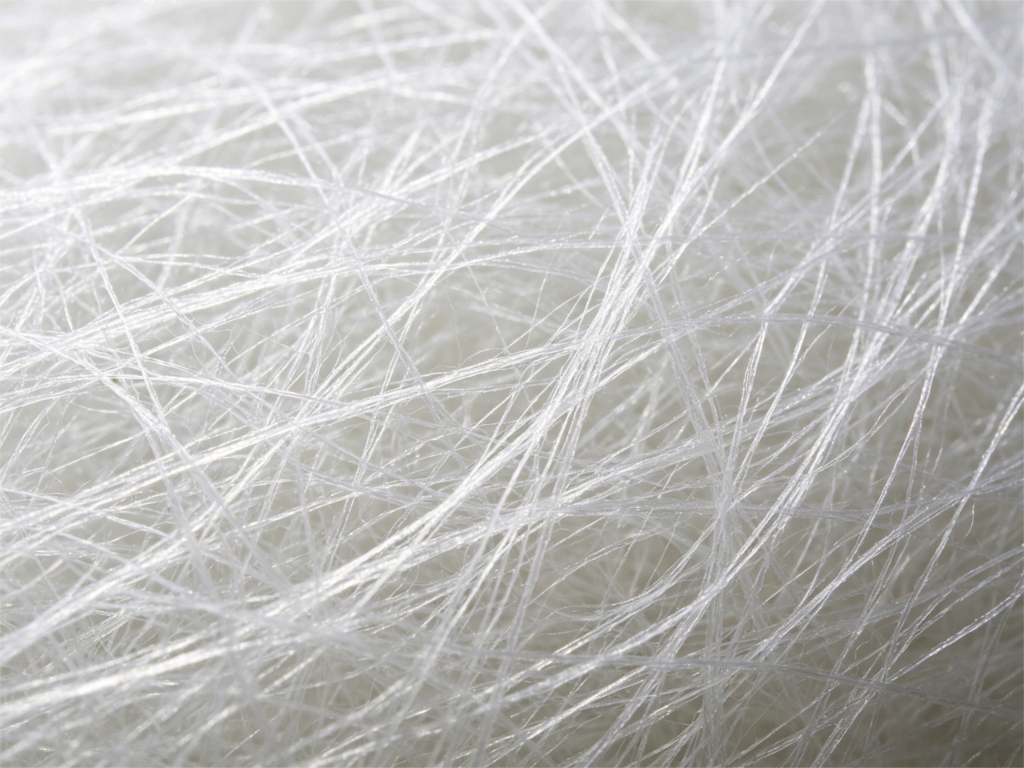
Micro-glass fiber has been the default HEPA media for decades, and for good reason. The material is a random web of extremely fine glass fibers. Diameters typically fall between 0.5 and 1.5 micrometers. The fibers are bonded into a dense, depth-loading sheet.
Why depth loading matters
Depth loading is the key phrase. Particles do not just sit on the surface. They penetrate into the fiber matrix and get trapped throughout the thickness of the media. That gives glass fiber its biggest advantage, high dust holding capacity. Industry data commonly places glass fiber dust holding in the 350 to 450 gram range. Tests run to a final resistance of 500 Pa. That is roughly two to three times what a PTFE membrane can hold under the same conditions.
In practical terms, a glass fiber filter in a dusty HVAC or industrial setting climbs in pressure slowly. It tolerates neglect. If your end user changes filters on a loose schedule, glass fiber is the forgiving choice. The same holds true if the air carries a heavy particle load.
Cost and certification
Glass fiber also has a mature supply chain and a lower material cost. This matters when you are scaling a private label line. Every cent of unit cost counts. Most EN 1822 certified H13 and H14 panels on the market still use glass fiber for exactly this reason.
Where glass fiber falls short
The trade-offs are real though. Glass fiber is brittle when wet. Wet tensile strength can drop below 2 N per 15 millimeters. A damp filter can tear during handling or pleating. It is not meant to be washed. Repeated water contact degrades the binder and can release fibers. Its initial pressure drop is also inherently higher. The dense fiber network forces air through a long, twisting path.
Synthetic media low resistance and resilience where glass fiber fails
Synthetic HEPA media covers two common formats. Expanded PTFE membrane laminated to a non-woven support. And electrostatically charged melt-blown PP. PTFE is the higher-performance variant. It is the one most often compared directly to glass fiber at H13 and above.
How PTFE cuts resistance
PTFE works by surface filtration. The membrane has a precise, uniform pore structure. It catches particles on or near the surface. Because the pores are controlled and the membrane is thin, initial resistance is dramatically lower. Published comparisons show PTFE initial pressure drop around 38 to 55 Pa. Glass fiber at the same H14 efficiency reads 80 to 110 Pa. That is a reduction of roughly half.
A CDC study found a similar pattern at the system level. The study compared fiberglass and electrostatically charged synthetic filters. Fiberglass filters showed an adjusted initial pressure drop of 214 Pa. That was about 2.4 times the 89 Pa measured across synthetic filters. Lower resistance means the blower draws less current. This translates into quieter operation. It also means lower energy use over the filter life.
A peer-reviewed study in Aerosol and Air Quality Research reached a related conclusion. PTFE media is generally more energy efficient than glass fiber. The exception is heavy loading or infrequent maintenance. In those cases, glass fiber’s larger dust capacity catches up.
Moisture and washability
PTFE also solves the two problems glass fiber cannot. It is hydrophobic, with a water contact angle around 120 degrees. It does not absorb moisture. It does not swell or lose strength in humid airstreams. Wet tensile strength stays above 70 N per 15 millimeters.
Particles collect on the surface rather than deep inside. This means a PTFE filter can often be gently washed or blown clean. It can be reused one or two times without a meaningful drop in efficiency. Membrane filtration research in RSC Advances supports this finding.
The dust holding trade-off
The downside is dust holding. Surface loading means the filter cake builds quickly. Pressure drop rises faster once dust accumulates. PTFE dust holding typically lands between 120 and 200 grams. That is to the same 500 Pa endpoint. In a clean environment with regular maintenance this is irrelevant. In a heavy-dust setting, it means shorter service intervals.
Three numbers that settle most OEM material debates
If you only remember three comparisons, make them these.
Pressure drop at the same efficiency grade. Synthetic PTFE runs roughly half the initial resistance of glass fiber. This directly reduces fan power and noise.
Dust holding capacity to a fixed final pressure. Glass fiber holds roughly two to three times more dust. This means longer life in dirty air.
Wet tensile strength. PTFE retains more than thirty times the strength of glass fiber when exposed to moisture. This makes it the only realistic choice for washable or humid-environment filters.
These three numbers do not declare a winner. They declare a trade-off. Lower resistance and washability on one side. Higher dust capacity and lower material cost on the other. Every OEM decision is just a question of which side of that trade-off your end user lives on.
Matching the media to your actual product
Rather than asking which material is better, ask what the filter has to survive.
When glass fiber is the right call
Choose glass fiber for a standard air purifier filter, HVAC panel, or fresh air system. These applications share a few traits. The air is dry. Dust levels are moderate to high. The filter is disposable.
Glass fiber is also the safer choice when unit cost is the dominant constraint. You need a mature, widely certified supply base in that scenario. For most residential and commercial air purifier cartridges, glass fiber remains the default. It balances cost, certified efficiency, and real-world lifespan.
When PTFE synthetic wins
Choose synthetic PTFE for a vacuum cleaner filter, a wet-dry vacuum component, or a medical device filter. It also fits any appliance marketed as washable and reusable.
PTFE is the right call for equipment operating in high humidity. Think near kitchens and bathrooms. Or climates where condensation inside the duct is a real risk. If your marketing story includes lifetime cost savings through reduced fan energy, PTFE gives you the data to back it.
Where melt-blown PP fits
Choose melt-blown PP synthetic for lower-grade, high-volume consumer filters. Electrostatic charge boosts initial efficiency at a very low material cost. But be aware that charge can decay over time. It also decays with exposure to certain aerosols. For this reason, it is rarely the answer for true H13 and above in demanding B2B equipment.
Building both media types at HIFINE
At HIFINE we manufacture custom HEPA filters in both glass fiber and synthetic PTFE media. The right answer depends on your product, not on a house preference. We pleat, gasket, and frame to your dimensions. We can also run EN 1822 efficiency verification on production batches for OEM and private label programs.
If you are developing a vacuum cleaner filter line, start with the washable synthetic option. If you are scaling an air purifier cartridge for a retail brand, glass fiber usually wins. It wins on cost per cubic meter of clean air delivered. For humidifier-adjacent or kitchen air products, PTFE avoids the moisture failure modes that generate warranty claims.
Send us your dimensions, target efficiency grade, and the environment the filter will live in. We will recommend the media, quote the tooling, and send sample cartridges for your own bench testing.