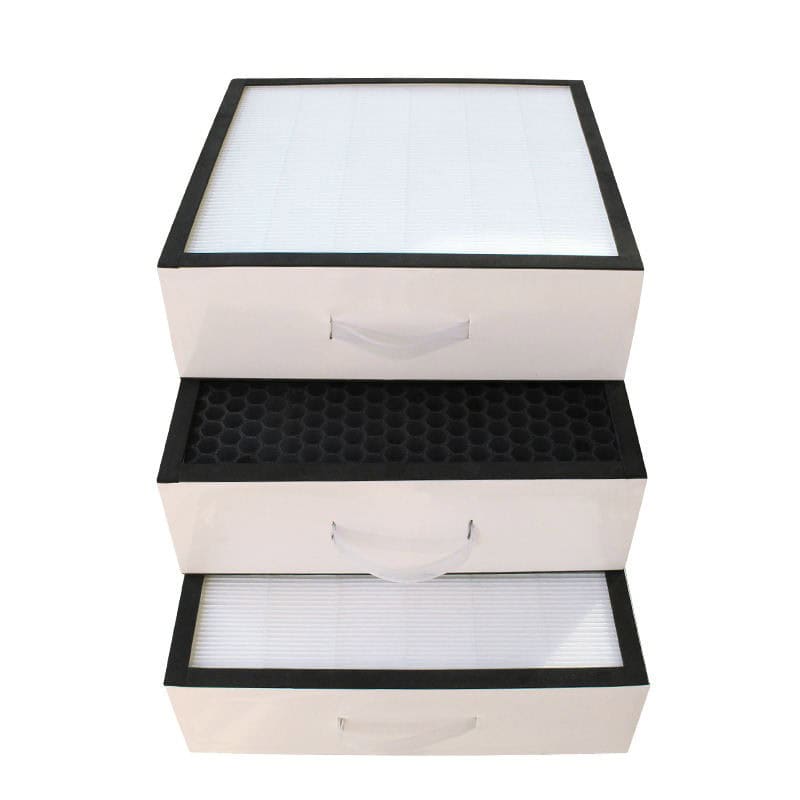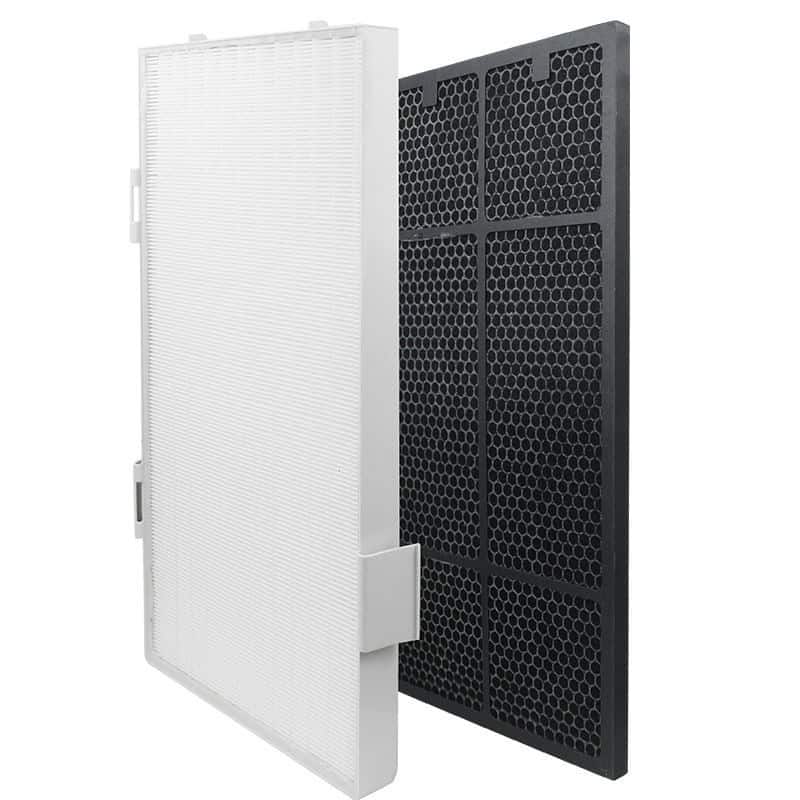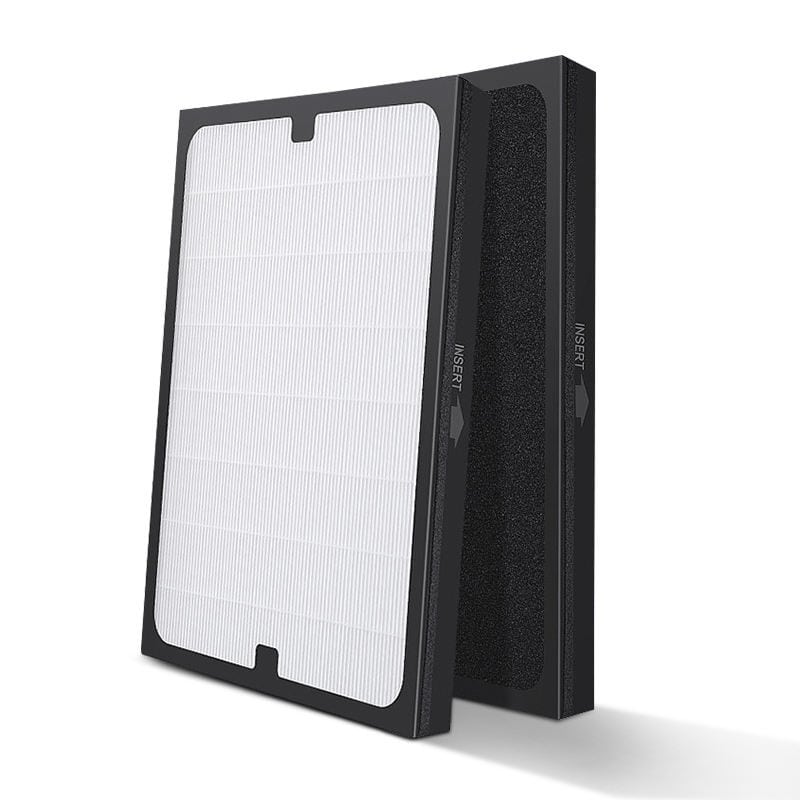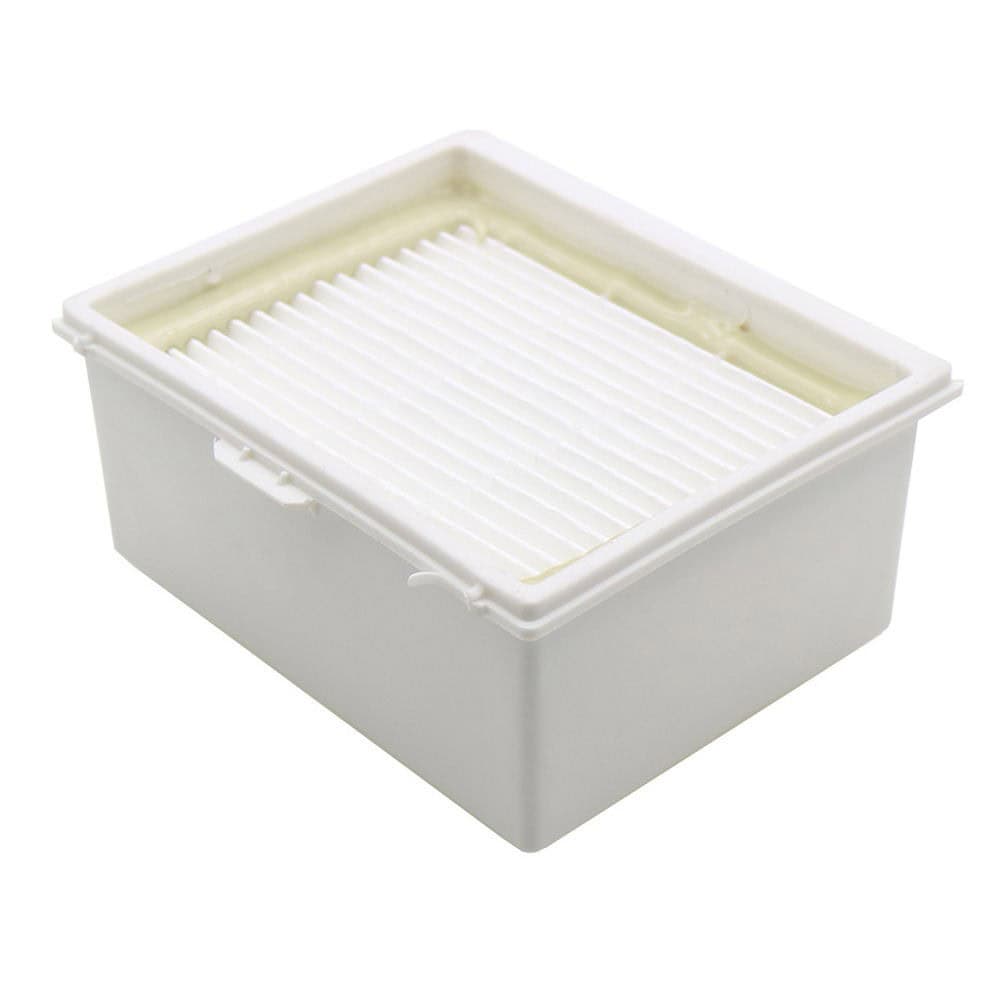

Most people replace the membrane when their RO system starts underperforming. That instinct is almost always wrong—and expensive. The membrane is rarely where the problem begins.
What Is a Reverse Osmosis Filter, and Where Is It Used?
A reverse osmosis filter is a home or light-commercial water purification system that pushes tap water through a semi-permeable membrane under pressure. That membrane blocks dissolved solids, heavy metals, fluoride, nitrates, and a wide range of contaminants that standard pitcher or faucet filters cannot reach.
RO systems are common in households dealing with well water, in areas where municipal water quality fluctuates, and in kitchens where clean water matters beyond taste—specialty coffee setups, baby formula preparation, and anyone managing dietary mineral intake. They’re also standard in small commercial environments: cafés, aquariums, and lab prep stations.
The output is reliably clean water, often reading near-zero on a TDS meter. But that output depends entirely on what happens before water reaches the membrane—and that’s the part most guides treat as a footnote.
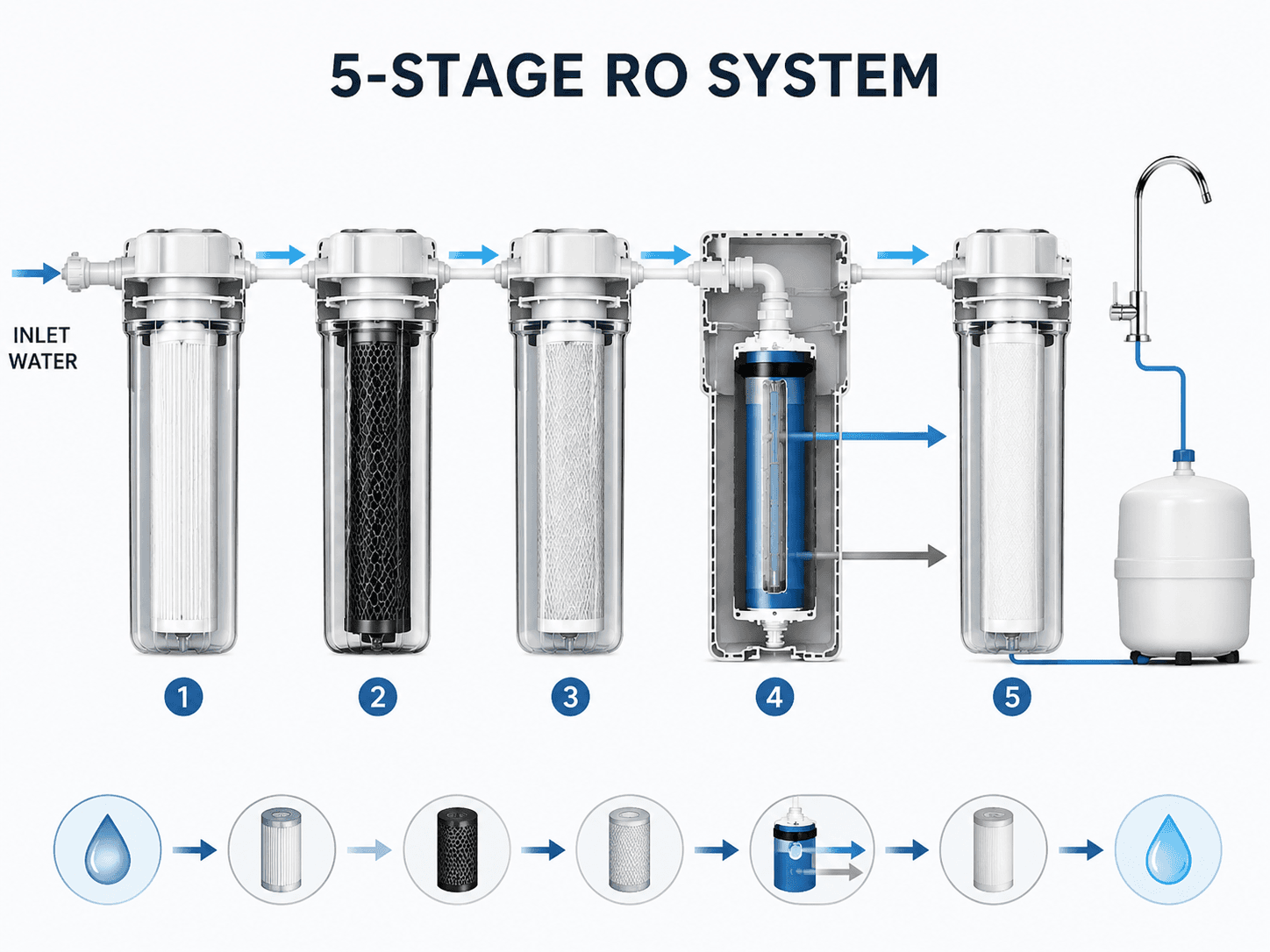
How a 5-Stage RO System Actually Divides the Work
Before water ever contacts the membrane, it travels through three pre-filter stages.
| Stage | Filter Type | Primary Job |
|---|---|---|
| Stage 1 | Sediment pre-filter | Removes rust, sand, silt, suspended particles |
| Stage 2 | Carbon block pre-filter | Removes chlorine, chloramines, VOCs |
| Stage 3 | Fine sediment or secondary carbon | Catches residual particles and chemical traces |
| Stage 4 | RO membrane | Removes dissolved solids, heavy metals, fluoride, nitrates |
| Stage 5 | Post-carbon polishing filter | Final taste and odor refinement |
Stages 1 through 3 exist for one purpose: protecting Stage 4. The membrane is precision filtration. The pre-filters are the rough work crew that makes that precision possible.
The Water Quality Association identifies inadequate pre-treatment as the leading cause of premature RO membrane failure. That’s not a technical footnote. It’s the central variable in how long your system actually lasts.
Why Pre-Filter Failure Quietly Destroys Your RO Membrane
The Sediment Pre-Filter Isn’t About Taste
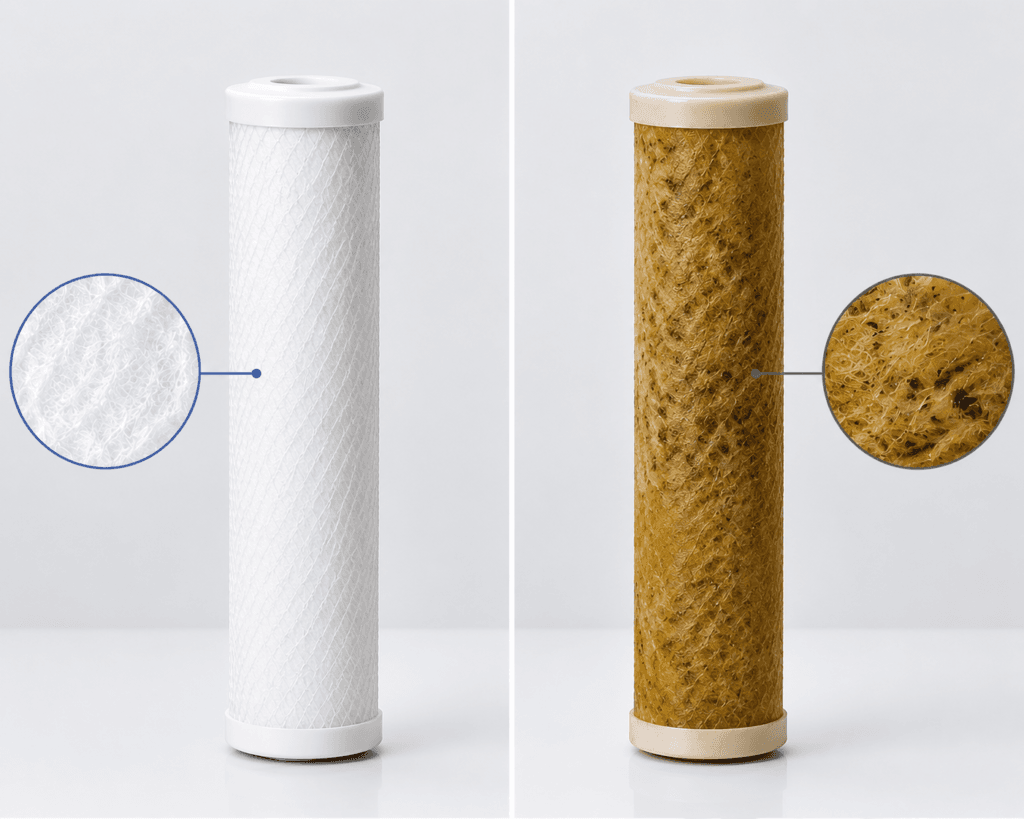
The sediment stage’s job is not to improve water flavor. Its job is to prevent suspended particles from mechanically fouling the membrane surface.
Budget sediment cartridges use single-density polypropylene that compresses under pressure and develops channeling—paths of least resistance where unfiltered water bypasses the media entirely. Sub-5-micron particles reach the membrane and foul it in ways that cannot be reversed with flushing or backwashing. A membrane rated for 36 months can begin failing at month 14.
The better specification: graded-density polypropylene, where filtration density increases progressively toward the core. It maintains particle capture across the full rated service period, not just when the cartridge is newly installed.
The Carbon Block Pre-Filter Is the Membrane’s Only Chemical Defense
Thin-film composite membranes—used in virtually all residential RO systems—have essentially zero tolerance for free chlorine. Chlorine oxidizes the polymer and degrades it irreversibly. Once that degradation starts, no maintenance step fixes it.
The carbon block pre-filter works through adsorption: chlorine molecules bond to the carbon surface until it saturates. At that point, chlorine passes through without any taste or smell signal. You won’t know it’s happening until your TDS numbers start rising.
NSF/ANSI Standard 58, which governs certification of residential RO systems in the United States, requires demonstrated chlorine reduction through pre-filtration before water contacts the membrane—because the membrane simply cannot survive without it.
According to American Water Works Association testing benchmarks, coconut shell-derived activated carbon outperforms coal-based alternatives in both chlorine reduction capacity and VOC adsorption. A quality carbon block should use media with a surface area exceeding 1,000 m²/g. Block density determines water-to-carbon contact time—the variable that determines how much chlorine actually gets removed versus passed downstream.
The Replacement Schedule That Actually Protects Your Membrane
The membrane’s rated lifespan of 24 to 36 months assumes pre-filters are replaced on schedule. That assumption is built into the rating itself.
Recommended intervals based on WQA guidance and NSF testing protocols:
- Sediment pre-filter: every 6 to 12 months
- Carbon block pre-filter: every 6 to 12 months
- RO membrane: every 24 to 36 months, or sooner if TDS rejection drops below 85%
- Post-carbon polishing filter: every 12 months, or at membrane replacement
A TDS meter is the most practical monitoring tool for home reverse osmosis systems. A healthy membrane rejects 90 to 97% of dissolved solids. If that rejection rate drops below 85%, the membrane is compromised. Before ordering a replacement, trace the failure upstream through the pre-filter stages. That’s almost always where it starts.
How to test your RO system with a TDS meter
Before You Test
- Grab a digital TDS meter and two clean glasses
- Run the RO faucet for 30 seconds to flush out stagnant water
- Rinse the meter prongs with pure water and wipe dry
The 4-Step Testing Process
- Test Tap Water: Fill the first glass with cold tap water. Submerge the meter prongs for 5 seconds and record the number as T1.
- Test RO Water: Run the RO faucet for 1 full minute. Fill the second glass, insert the meter, and record the number as T2.
- Test Drain Line : Sample the water from the system drain line. The reading should be significantly higher than your tap water.
- Calculate Rejection Rate : Use the standard formula below.
Interpreting Your Results
| Rejection Rate | Membrane Status | Action Needed |
| 90% or higher | Excellent | None, the system works perfectly |
| 80% to 89% | Declining | Replace sediment and carbon pre-filters, then retest |
| Below 80% | Failed | Replace the RO membrane immediately |
The reverse osmosis system exhibits clear fault warning signals
RO systems rarely fail with obvious warning signs. These signals are worth knowing before performance drops:
- Slower output from the RO tap: A clogged sediment pre-filter is restricting inlet pressure, or a fouled membrane is reducing flow rate.
- Rising TDS readings across consecutive tests: Membrane compromise, most often traceable to pre-filter failure upstream.
- Change in taste or odor: Post-carbon filter exhaustion, or carbon pre-filter saturation allowing VOCs through to the tap.
- Longer or louder drain cycles: Reduced membrane efficiency, typically from mineral scaling caused by sediment or chemical breakthrough.
The WHO’s Guidelines for Drinking-water Quality recommends ongoing monitoring of household water treatment systems as a core safe-water practice. For RO users, a TDS meter and a basic pressure gauge can provide enough data to detect a pre-filter failure before it reaches the membrane.
End
RO membrane lifespan is not a fixed number. The 24-to-36-month range is a ceiling that pre-filter performance either protects or erodes. Give the membrane clean, chlorine-free, sediment-free water and it performs for its rated period. Let pre-filters fail silently, and the membrane pays for it months ahead of schedule.
Filter cartridge dimensions match across brands. Media quality does not. Graded-density polypropylene for sediment stages and high-surface-area coconut shell activated carbon for chemical stages are the specifications that determine whether replacement cartridges actually protect the membrane—or simply occupy the housing.
HIFINE produces non-woven polypropylene and activated carbon filter media for replacement cartridges across household and OEM applications. For systems where pre-filter quality directly determines membrane service life, full specifications are available at HIFINE Water Filters.