
Indoor air is usually the least examined part of a home’s health. According to the U.S. Environmental Protection Agency, it is typically two to five times more polluted than the air right outside, and in some homes it is far worse. People spend close to ninety percent of their day indoors, so the real question is not whether an air purifier for home use is worth buying. It is whether the filtration actually matches the air problem in that specific home. This guide covers how these machines work, what the certification numbers mean, how to size one for a room or a whole house, and where the limits sit. It uses the same standards and test data that filter manufacturers such as HIFINE rely on internally.
Searches for an air purifier for home use spike every year around wildfire season, pollen season, and cold and flu season. But the underlying decision does not change with the calendar. A shopper comparing units is really weighing three things: the filtration standard behind the media, the airflow the unit can sustain in a specific room, and the ongoing cost of keeping that filtration performing at its rated level. Skip any one of those three, and a purifier that looked good in reviews often ends up sitting unused within a year. The sections below follow the order a buyer actually needs: what the machine does, how to read the certification, how to size it, and what keeps it working over time.
How Does an Air Purifier Actually Clean the Air?
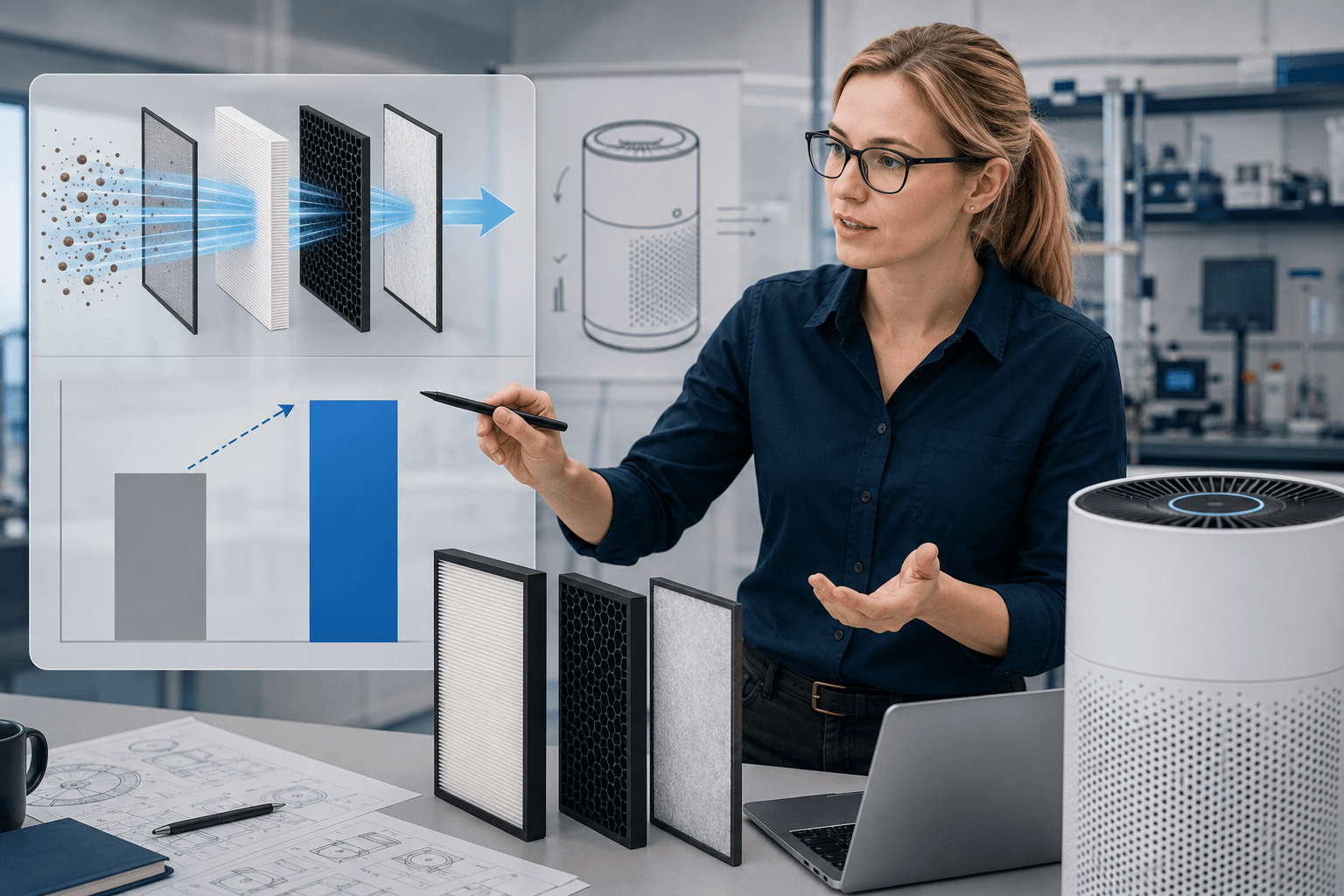
A purifier pulls room air through a fan and pushes it across one or more layers of filter media, then returns cleaner air on the other side. That sounds simple, and mechanically it is. But the real performance depends on what that media consists of and how much air moves through it every hour. Two units drawing the same wattage can still perform very differently, depending on media density, pleat design, and real airflow. Devices that rely mainly on ionization or plasma technology, rather than physical filtration, often skip this mechanical step almost entirely. That is one reason their real-world results tend to lag behind properly defined HEPA units.
There is also a regulatory reason to stay cautious about non-mechanical technologies. The California Air Resources Board requires most electronic indoor air cleaning devices sold in the state to carry ozone-emission certification, capping output at 0.050 parts per million. The rule exists because ionization can generate ozone as a byproduct, and ozone irritates the lungs rather than helping them. Mechanical HEPA filtration skips this certification requirement for a simple reason: it does not produce ozone in the first place. That single detail is a useful shortcut when comparing two units that both claim to clean the air but rely on very different mechanisms.
What Makes a Filter Actually HEPA?
HEPA is not a brand name or a vague quality label. It is a defined performance standard, and understanding what actually qualifies as HEPA filtration is worth confirming before comparing any two units. Under the U.S. Department of Energy definition, a true HEPA filter must capture 99.97 percent of particles at 0.3 microns. That is the hardest particle size for any filter media to trap. The difference between a certified true HEPA filter and one sold under the softer “HEPA-type” label is not just wording. It directly affects how much fine dust, smoke, and allergen particulate gets through.
Within true HEPA, grades range from H11 up to H14. Higher grades trap a larger share of the smallest particles, which is why several premium purifier brands have moved to H13 media, even though the rating originally came from hospital and cleanroom environments.
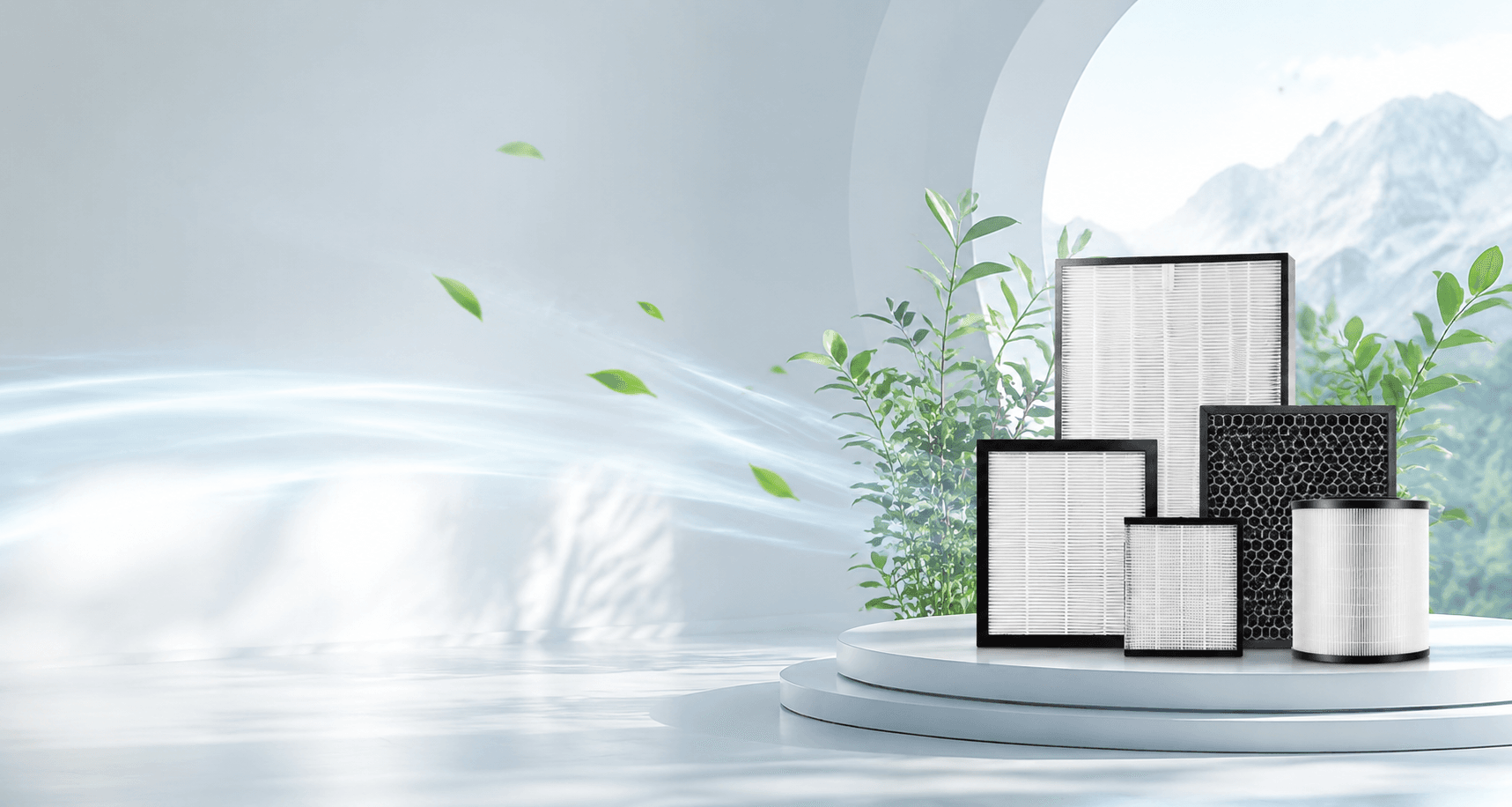
Performance also depends on more than the grade printed on the box. Fiber density, pleat depth, and how fast air moves through the media all affect real-world efficiency. Two filters with the same grade can still perform differently in the same room. Construction matters too. Single-layer and multi-layer HEPA media trap particles differently, and fine pleating that packs more surface area into a small housing affects both airflow and lifespan.
Does an Air Purifier Need Carbon or UV Filtration Too?
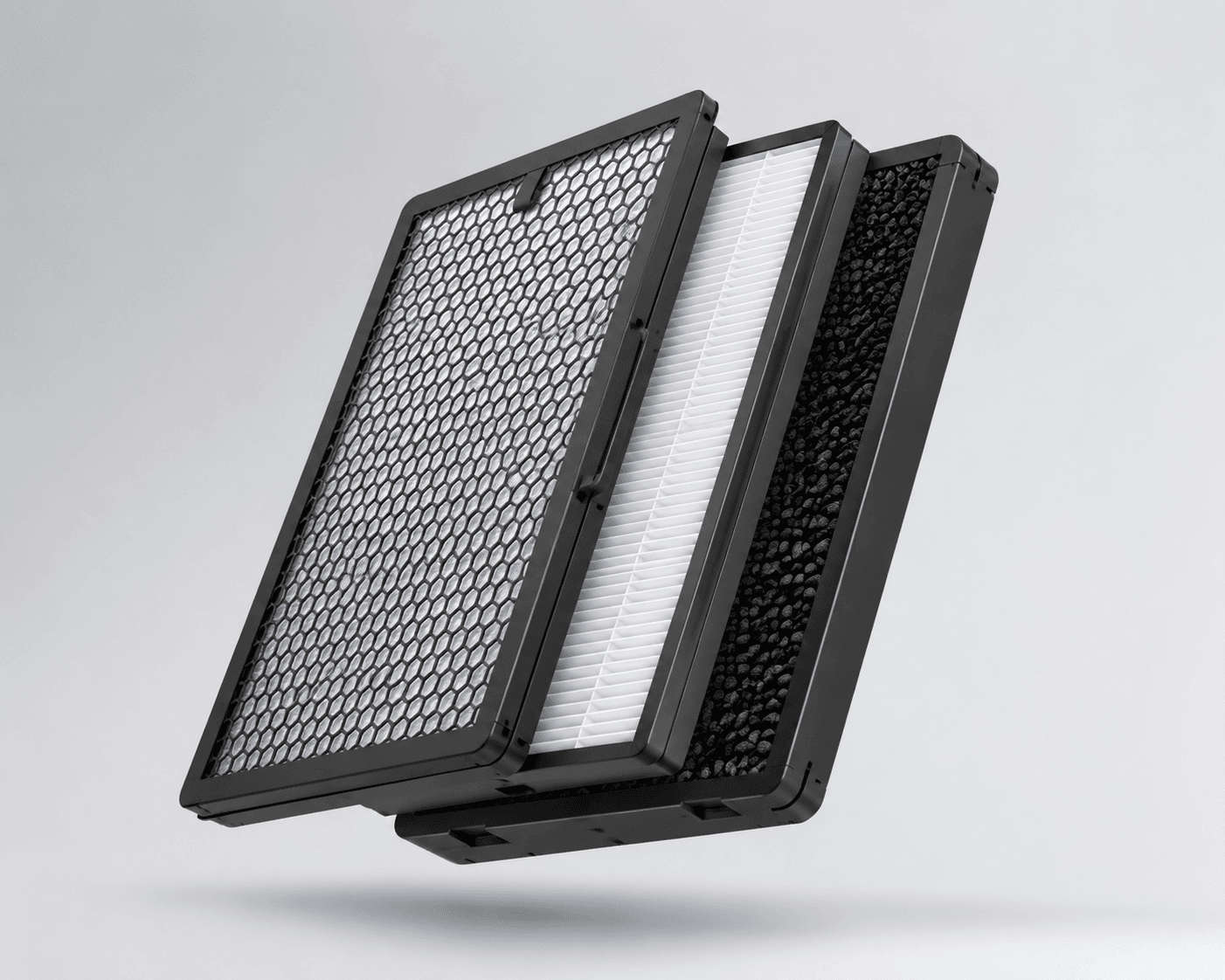
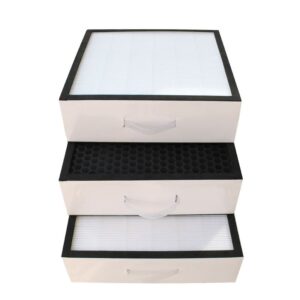
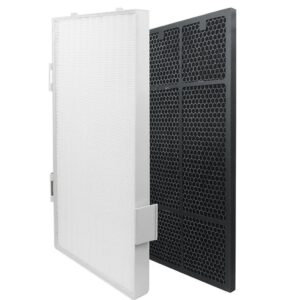
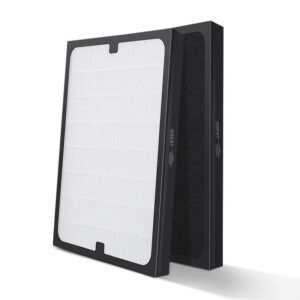
Most home purifiers are not pure HEPA units. They combine a HEPA stage with one or more add-on layers, and knowing what each one contributes helps separate real performance from packaging language. A pre-filter, usually a coarse mesh in front of the HEPA layer, catches larger debris like hair and lint. That keeps the fine HEPA media from clogging prematurely and extends its working life. An activated carbon layer works through adsorption rather than filtration, trapping gas molecules and odors in a porous carbon structure. That is the only realistic way to handle cooking smells, pet odor, and the volatile compounds paint or new furniture release, since particle filtration alone cannot touch gases at all.
Ultraviolet germicidal lamps show up in some higher-end units. Brands market them as a way to neutralize bacteria and viruses that pass through the filter. But the evidence for meaningful benefit in a typical home, at typical exposure times and lamp intensities, is considerably weaker than the marketing suggests. A HEPA layer already captures the vast majority of airborne pathogens mechanically before UV exposure would even matter. Ionizers and plasma-based technologies carry the added complication of potential ozone output, so any unit using these methods should carry current CARB certification for sale to California residents. For most households, a strong HEPA stage paired with a reasonably sized activated carbon layer covers the overwhelming majority of real-world air quality complaints, without the extra technology layered on top.
Which Air Purifier Do You Need for Your Specific Problem?
Naming the trigger specifically makes the buying decision easier, since different air problems call for genuinely different filtration strategies rather than one universal setup.
What’s the Best Air Purifier for Allergies and Pollen?
Pollen grains are relatively large compared to smoke or bacteria, but seasonal reactions are still one of the most common reasons households buy their first purifier. More than 106 million people in the United States live with allergies or asthma, according to the Asthma and Allergy Foundation of America. Capture rate at the smaller end of the particle range still matters here, since pollen breaks apart into finer fragments once it circulates indoors.
What’s the Best Air Purifier for Pet Dander?
Standard filtration sized for household dust does not always keep up with pet dander, which sheds continuously rather than seasonally. General-purpose purifiers often underperform in homes with pets for this reason. Higher CADR ratings, paired with more frequent filter changes, tend to matter more here than in a pet-free home.
Can an Air Purifier Remove Mold and Musty Odors?
HEPA media captures mold spores already in the air, but it does not address the moisture source growing them in the first place. A purifier removes what is circulating, not what is still growing behind drywall or under flooring. That distinction matters most for anyone managing a chronic inflammatory response to mold exposure, where fixing the source has to come before filtration can help.
Does an Air Purifier Help With Smoke and Wildfire Haze?
Kitchen smoke, wildfire haze, and agricultural burning all produce fine particulate that behaves differently from ordinary household dust. How well a unit handles any of them comes down to particle size and how much activated carbon pairs with the HEPA layer, since smoke carries both fine soot and odor-causing gases at once.
Can an Air Purifier Remove VOCs and Renovation Fumes?
Fresh paint, adhesives, and new furniture release volatile organic compounds that a HEPA layer alone cannot capture, since these are gases rather than solid particles. A purifier only meaningfully reduces renovation odors if it includes a real activated carbon stage with enough mass to matter, not just a thin liner that some brands label as one.
Is an Air Purifier Good for Asthma and Sensitive Lungs?
People managing asthma benefit from knowing which airborne substances tend to trigger flare-ups, since it sets realistic expectations. A purifier can reduce airborne triggers, but it will not eliminate symptoms that other factors cause. The benefit tends to be clearest in specific groups: adults over 65, people recovering from respiratory illness, and infants. Filtration needs shift for a baby’s room compared with a general living room unit, since smaller room volumes, lower noise tolerance at night, and longer exposure hours all change the calculation. There is also a reasonable body of research on whether filtration measurably helps lung function recover over time, separate from simply reducing day-to-day exposure.
How Do You Size an Air Purifier for a Room or a Whole House?
Marketers use the phrase whole house air filter loosely, but a single portable unit rarely covers an entire home the way central HVAC filtration can. Anyone who specifically wants whole house air filter coverage usually gets better results from a central return filter or a properly ducted system. Portable units work best layered in for the bedrooms and living areas where people spend the most time.
The honest measure of coverage for a portable purifier is not the square footage on the box. It is how many air changes per hour the unit actually delivers at a room’s real size. Four to six air changes per hour is the general recommendation for allergy management, and that figure depends directly on the relationship between airflow, CADR, and filtration efficiency. Open-plan living spaces typically need a higher-output unit than a small bedroom, even at the same square footage.
Some buyers assume opening windows or adding houseplants can substitute for mechanical filtration. Neither moves anywhere close to the volume of air a fan-driven HEPA unit processes per hour. A purifier also will not lower room temperature; that is a common but mistaken assumption worth clearing up before buying based on it. Before sizing anything, confirm that current indoor air quality actually warrants purifying in the first place, since not every room needs the same level of filtration.
How Loud and Expensive Is an Air Purifier to Run?
Raising airflow without redesigning the filter media almost always means a louder fan. That CADR-to-noise tradeoff is one of the most common reasons a purifier ends up unplugged and forgotten within a few months. Manufacturers that manage to raise CADR without raising noise are usually doing it through media design, more surface area and better pleating, rather than a bigger, louder motor. A dirty filter compounds the problem from the other direction: pressure drop rises as media clogs, forcing the fan to work harder for less clean air and more noise at the same time.
Most of the time a unit just needs a new filter rather than a whole new machine. Replacing it promptly prevents both wasted money and a quietly underperforming purifier. Brands often market filter thickness as a proxy for quality, but whether thin filter media performs well or poorly really comes down to fiber density rather than sheer size. Over a full year, the real cost of ownership usually comes down to what replacement filters add up to compared with the purifier’s sticker price, a number worth calculating before comparing two units on price alone.
What Can’t an Air Purifier Do?
Filtration has real limits worth knowing before buying. Standard filter cartridges simply cannot capture some substances, including certain gases, and heavy metals in particular require specialized media beyond a standard HEPA layer. Some buyers try a DIY box-fan filter as a budget option, and it can capture some particulate. But the performance gap against a certified HEPA unit is meaningful enough to matter for anyone with a genuine medical reason to filter their air. Even a well-built filter eventually reaches the end of its life, and disposal is worth a moment’s thought for anyone going through several replacement filters a year.
Does Your Region Change What Air Purifier You Need?
Air quality needs are not uniform across the country. Wildfire smoke patterns have shifted noticeably in recent years, and parts of the American West now need stronger HEPA filtration than most other regions because of it. Cooling and filtration also come from different components, even inside the same combination unit, so buyers comparing a portable air conditioner should judge its filtration stage on its own merits rather than assume it matches the cooling performance.
How Much Does an Air Purifier Really Cost?
Entry-level units, built around a small true HEPA filter and a thin carbon layer, sit at the lower end of the market and suit a single bedroom or home office. Mid-range units step up from there with higher CADR ratings, larger filter surface area, and app-connected controls. Units built for large open-plan living spaces or whole-floor coverage sit at the top of the range, often paired with H13-grade media and multiple filter stages.
The purchase price is only half the calculation. A unit with a cheap upfront price but an expensive, frequently replaced proprietary filter can cost more over three years than a pricier unit with a longer filter life and a widely available replacement cartridge. Working out the true first-year cost, purchase price plus a full year of filter replacements, gives a far more honest comparison than the shelf price alone.
What Should You Check Before Buying an Air Purifier?
Six questions cover most of what determines whether a purifier will work in a specific home, rather than comparing every spec side by side.
- Dominant pollutant: Pollen, pet dander, mold spores, and cooking smoke each call for different filtration priorities.
- Room size versus CADR: Does the rated CADR support four to six air changes per hour at the room’s actual size, not at some larger reference room used in marketing?
- Verified HEPA claim: Does the HEPA claim come with an actual EN1822 or DOE test report, rather than just a “HEPA-type” label on the box?
- Real-world noise: What does the unit sound like at the fan speed it will realistically run most of the time, not just on its lowest setting?
- Annual filter cost: What does a full year of replacement filters cost, and how easily can buyers source them once the original packaging is gone?
- Activated carbon stage: Does the unit include a real carbon layer if odors or VOCs are part of the problem, since HEPA alone will not touch those?
A purifier that answers all six well for a specific room is a far safer purchase than one chosen mainly on brand recognition or shelf price.
How Do You Verify an Air Purifier’s HEPA Claims?
Confirming a manufacturer’s claims against an actual test report protects against paying premium prices for filtration that never earned its rating. Independent test data based on EN1822 or DOE protocols is the same benchmark manufacturers such as HIFINE use internally. A unit worth buying should produce that documentation on request, rather than relying on marketing language alone. A genuine report names the testing lab, the model or part number it tested, the particle size used for the measurement, and the resulting capture percentage. Vague claims like “99% effective,” without any of those details, are a reasonable signal to ask more questions before buying.
What Should Brands and Private Label Buyers Know About Sourcing Filtration?
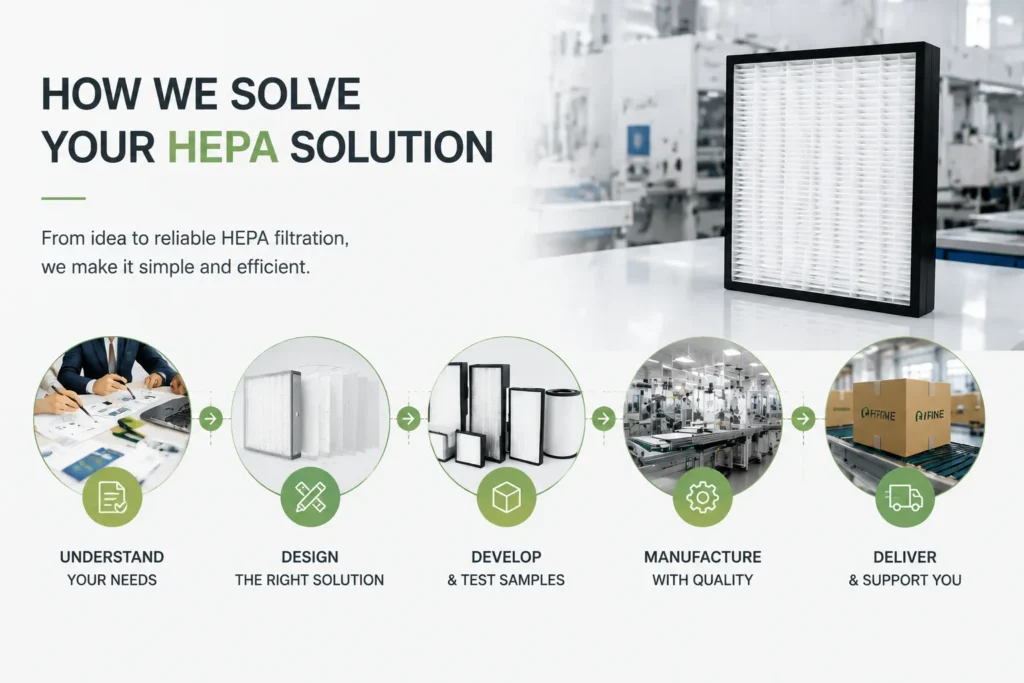
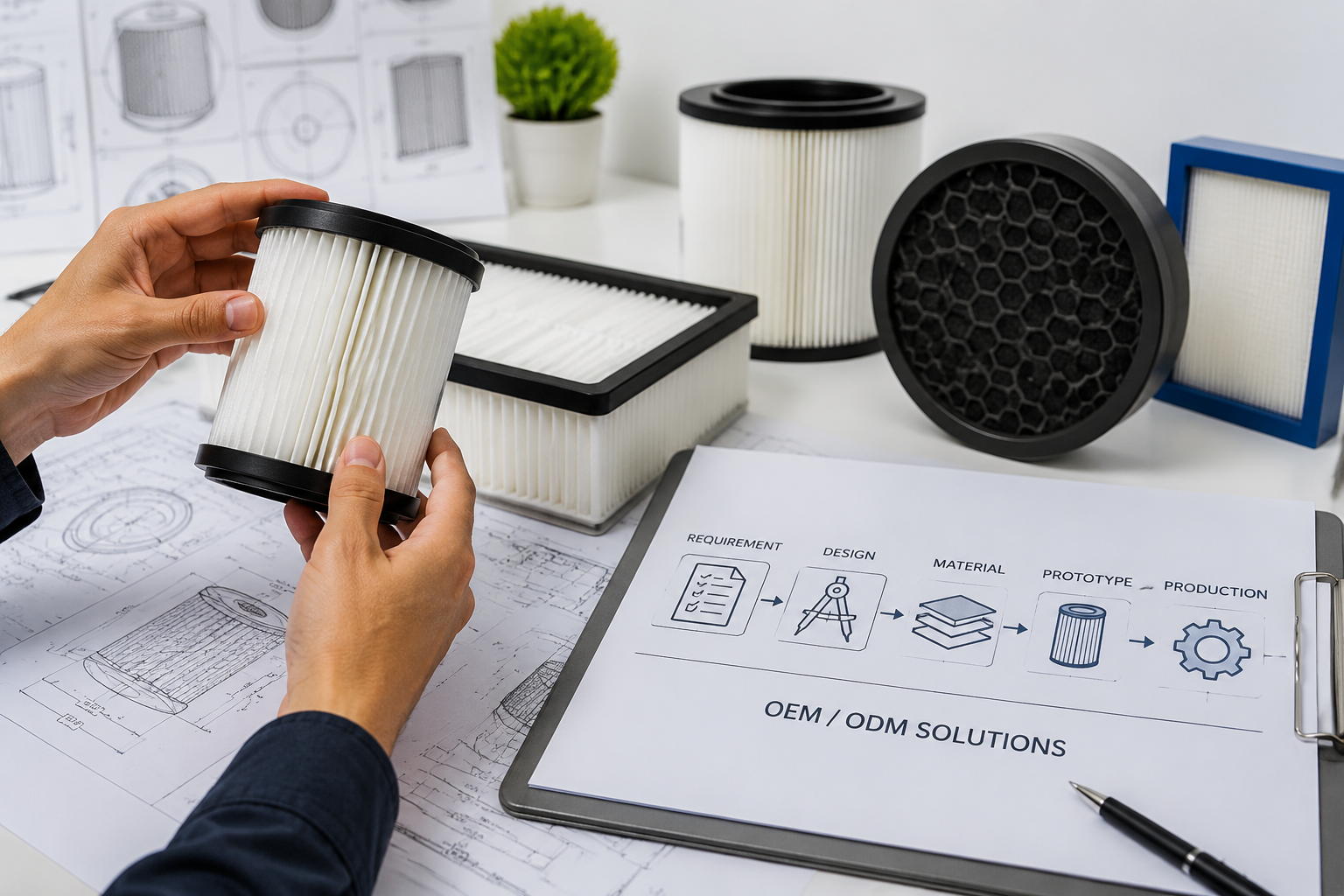
Everything above targets someone buying one purifier for one room. The same standards apply on the other side of the supply chain, for anyone sourcing the filtration itself rather than a finished unit. HIFINE manufactures HEPA filter media, air purifier filter cartridges, vacuum cleaner filter cartridges, and OEM/ODM filtration components for overseas brand owners, wholesalers, distributors, and private label buyers building their own product lines. The H11 to H14 grading, EN1822 and DOE test protocols, and CADR-to-airflow relationships covered in this guide are the same documentation that ships with every HIFINE filter media batch, so a brand can back its own true HEPA or H13 claims with real test data instead of a supplier’s word alone.
For teams comparing factories rather than finished products, the practical questions shift toward sourcing: minimum order quantities, private label packaging turnaround, and whether a factory can produce across the full H11 to H14 range instead of a single grade. HIFINE covers that range for air purifier filter cartridges, along with compatible replacement cartridges for vacuum cleaners and other appliance categories, with OEM production to a brand’s own spec and ODM development for private label buyers who need a filter built from scratch.
None of this has to be complicated. The right air purifier for home use fits the room it is actually going into, uses a properly graded HEPA filter with test data behind it, and carries enough activated carbon to handle whatever odors or VOCs are part of the problem. A single unit still cannot replace true whole house air filter coverage the way a ducted system can, but size it correctly for the room, and it solves the problem most households are actually buying one for. For brands, distributors, and private label buyers, the same principle scales up: match filtration grade and verified test data to the target market before committing to a production run, not after.