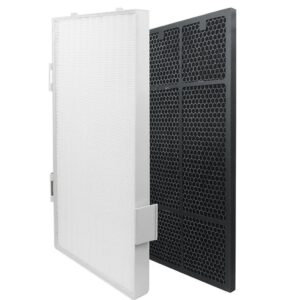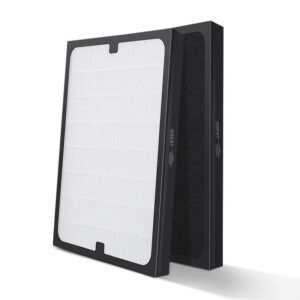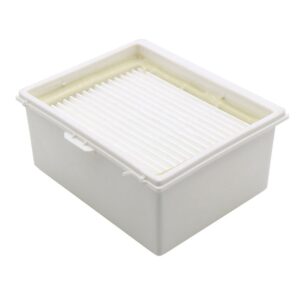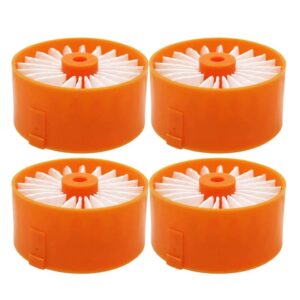

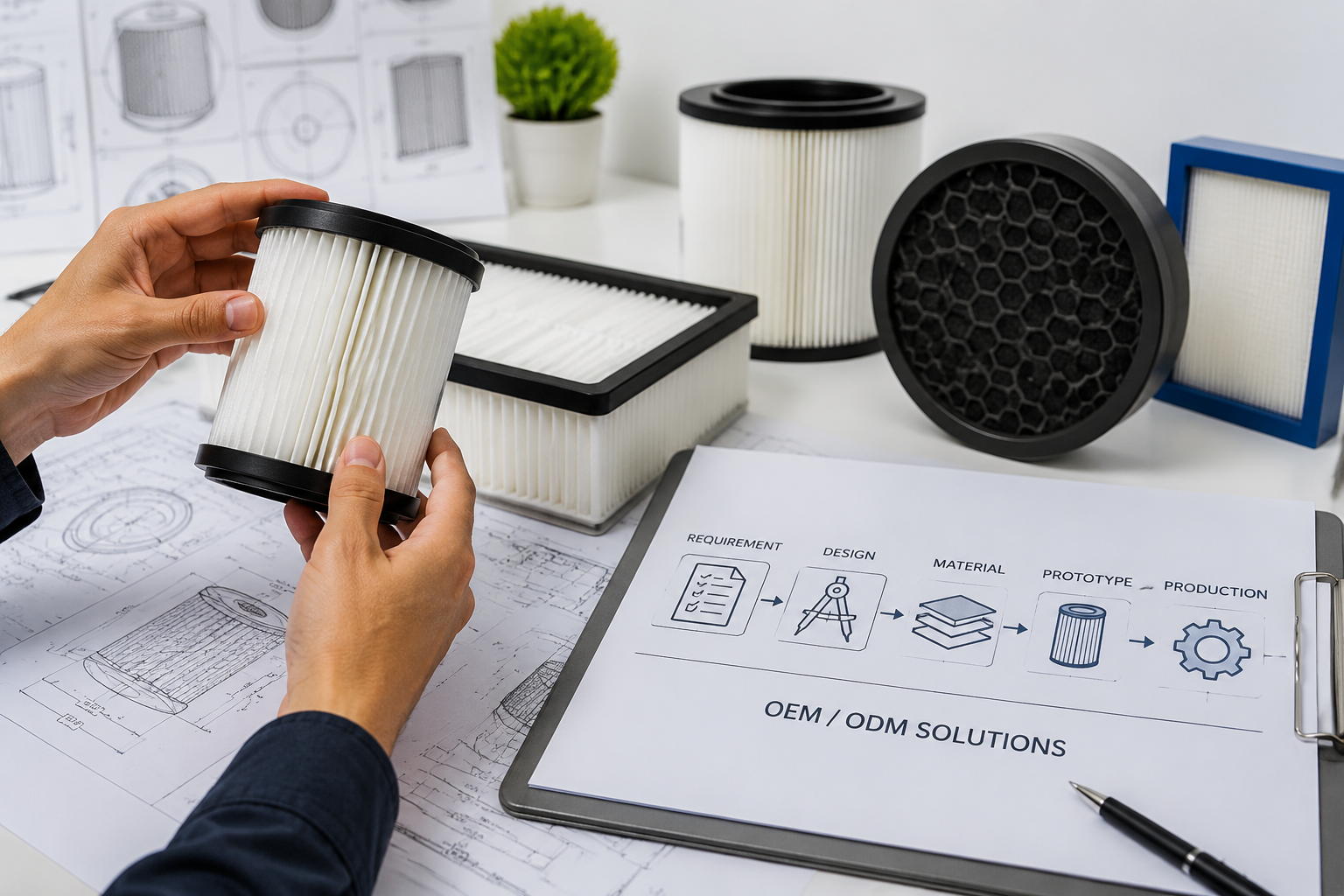
Search “OEM meaning” and you’ll find the same three-word answer copied across dozens of pages: original equipment manufacturer. That’s accurate, but it tells you almost nothing about what happens once you’re the one emailing a factory about minimum order quantities. This guide breaks down the OEM definition the way it actually plays out inside a filtration factory, where HIFINE builds custom HEPA filters, air purifier cartridges, and vacuum filter parts for brands, wholesalers, and private label customers around the world.
What Does OEM Stand For
OEM stands for original equipment manufacturer: a company that designs or produces parts, components, or finished products that another company sells under its own brand. The company doing the selling is usually called a value added reseller, since it takes the OEM’s product and adds branding, packaging, or extra features before it reaches a customer. According to Wall Street Prep, this OEM-VAR split started in the computer software industry and later spread into automotive, electronics, medical devices, and consumer appliances.
A familiar example: Microsoft supplies the operating system that Dell or Lenovo installs and sells as part of a branded laptop. The customer thinks they bought a Dell. The software inside came from Microsoft, the OEM in this relationship.
Worth being direct about one mix-up here: OEM isn’t the same thing as generic or knockoff. An OEM product is built to a defined specification, often the buyer’s own design, and it usually goes through sample approval and testing before mass production starts. A generic product just copies an existing design, with no formal spec review involved at all.
Why the Definition Shifts by Industry
Here’s the part most “OEM meaning” articles skip: the term flips depending on who’s using it. Wikipedia’s entry on the topic notes the term is genuinely ambiguous across industries, which is exactly why sourcing conversations get confusing fast.
Automotive: OEM Means “Original,” Not “Contract-Made”
A mechanic recommending an “OEM part” usually means a part made by or for the original carmaker, not a cheaper aftermarket copy from an unrelated company. Here OEM signals authenticity, almost the opposite of the general business definition.
Electronics and Software: The Classic Meaning
In electronics and software, OEM keeps its original shape: a company producing hardware or code that gets built into another company’s branded product, similar to the Microsoft example above.
Filtration: OEM Means Built to Your Spec
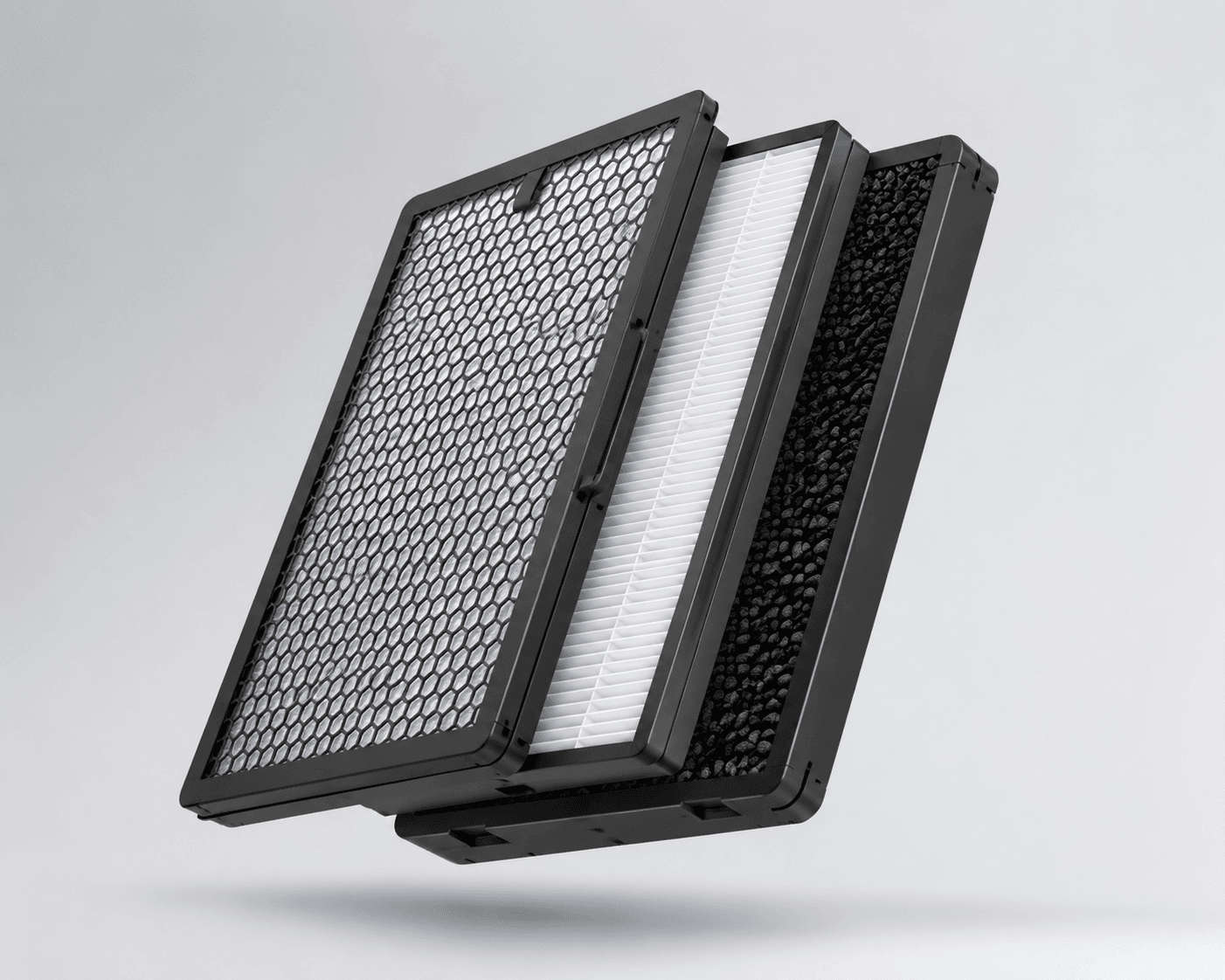
In filter and small appliance manufacturing, OEM almost always means a factory that builds filters, cartridges, or related parts to a brand’s specifications, then ships them ready for that brand to sell under its own name. The brand owns the customer relationship and the marketing. The factory owns the tooling, the material sourcing, and the process. Every dimension, media grade, and frame detail usually starts with a technical drawing, and factories need more on that drawing than most first-time buyers expect; we’ve laid out what actually needs to be on it in a separate post. Carrying the automotive definition into this world, assuming “OEM” means more official or more original, is where a lot of first-time buyers get tripped up.
OEM vs ODM vs Private Label
These three terms get used almost interchangeably, but the starting point of each relationship is different.
- OEM work begins with the buyer’s own design or specification. The factory manufactures to those instructions.
- ODM flips that. The factory develops the design, and the buyer selects and customizes from existing engineering rather than submitting original specs.
- Private label usually means applying your brand name and packaging to an existing catalog product, with little or no engineering change involved.
Many filtration factories, HIFINE included, blend all three: a buyer starts from a catalog filter, adjusts the dimensions or media grade, and ends up with something closer to a true OEM part sold under private label packaging. We’ve written more on where that line tends to sit on minimum order quantities for distributors placing a first order.
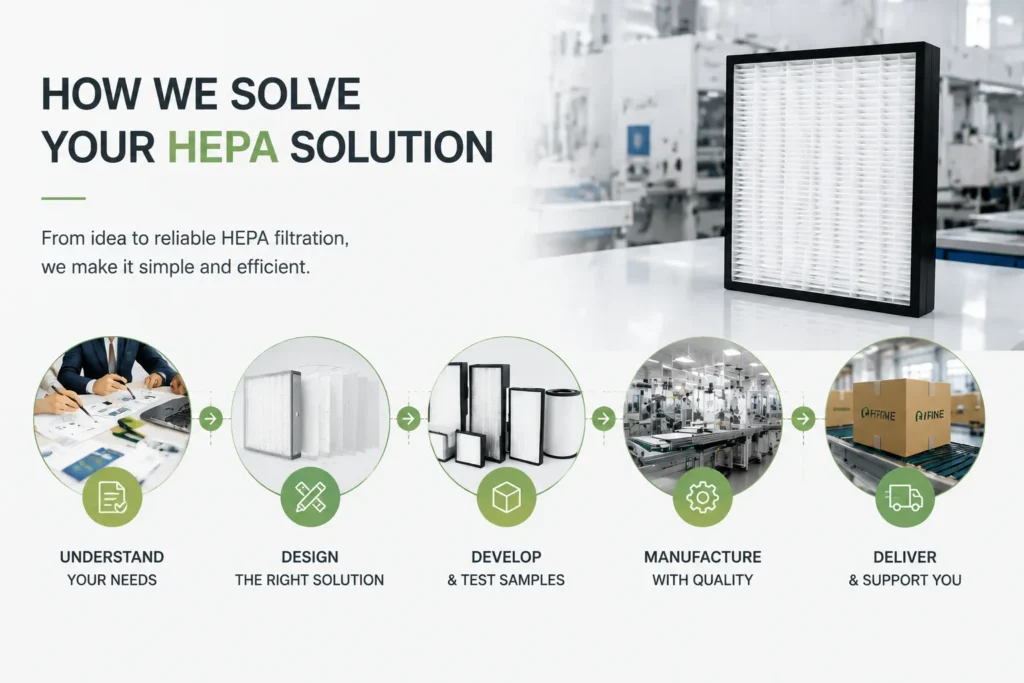
How an OEM Filtration Project Actually Moves
A real project doesn’t jump straight from “we want a filter” to a shipping container. It moves through a handful of checkpoints:
- Spec and drawing review: Geometry, target filtration efficiency, airflow, and any manufacturing constraints get discussed before anything is built.
- Prototype and sample validation: A factory that skips this step is asking you to trust a spec sheet with your brand’s reputation. Samples get built and tested against the agreed target first.
- Tooling and process verification: A sample that performs well on a bench doesn’t always survive a high-volume run. This stage checks whether the tooling and process actually hold up at scale.
- Mass production with batch testing: Full production runs with ongoing quality checks, not a one-time approval on the first sample. This is also where it helps to know what those test numbers are actually measuring, rather than taking a passed report at face value.
- Packaging, labeling, and logistics: Private label packaging, documentation, and export planning, particularly important for a brand running an ongoing supply program rather than a single order.
Cost and timeline both follow from where a project lands in that list. Cost is driven mostly by volume, media grade, and customization level; we’ve broken down the specific factors that move the price per unit separately. Timeline typically runs a few weeks to a few months depending on how much customization is involved, and that stretches further once shipping enters the picture, so it’s worth checking realistic lead times out of Chinese factories before setting expectations with your own customers.
This is roughly how projects run at HIFINE too, and it’s fairly standard across established filtration manufacturers, not something unique to one factory.
What to Look for in an OEM Manufacturing Partner
Before signing anything, ask whether the factory can genuinely adjust core specifications, such as frame size, media grade, or filtration class, or whether they’re just relabeling a catalog part. Ask how they validate prototypes, what testing standards they use, and what happens if a batch misses spec once production scales up. We’ve written more on the questions worth asking before you sign anything and what a factory’s certifications actually tell you. The answers reveal far more about a partnership than the word “OEM” printed on a company profile ever will.
Where to Go From Here
The OEM meaning is simple on paper and genuinely layered once it hits a real manufacturing decision. Whatever industry pulled you here, the practical question is always the same: who designed it, and who is actually building it? Brands exploring custom HEPA or activated carbon filtration are welcome to reach out about a project directly, or browse the full range of what HIFINE makes to start from there instead.