If you source whole house reverse osmosis systems for your brand or private label line, you have probably run into this problem. The spec sheet promises one set of numbers. The real world delivers something quite different. Flow rates drop. Removal rates fall short. Customers complain. It is not bad luck and it is not your fault. Every RO system on the planet operates under the same physical constraints, and many suppliers write spec sheets that push right up against those limits, or past them. Understanding the science behind reverse osmosis lets you spot the inflated claims before you sign a purchase order.
The Physics That Limits Every Whole House Reverse Osmosis System
Osmosis is a natural process. When two solutions with different salt concentrations sit on opposite sides of a semipermeable membrane, water moves from the less concentrated side to the more concentrated side until both sides balance out. That is the basic rule.
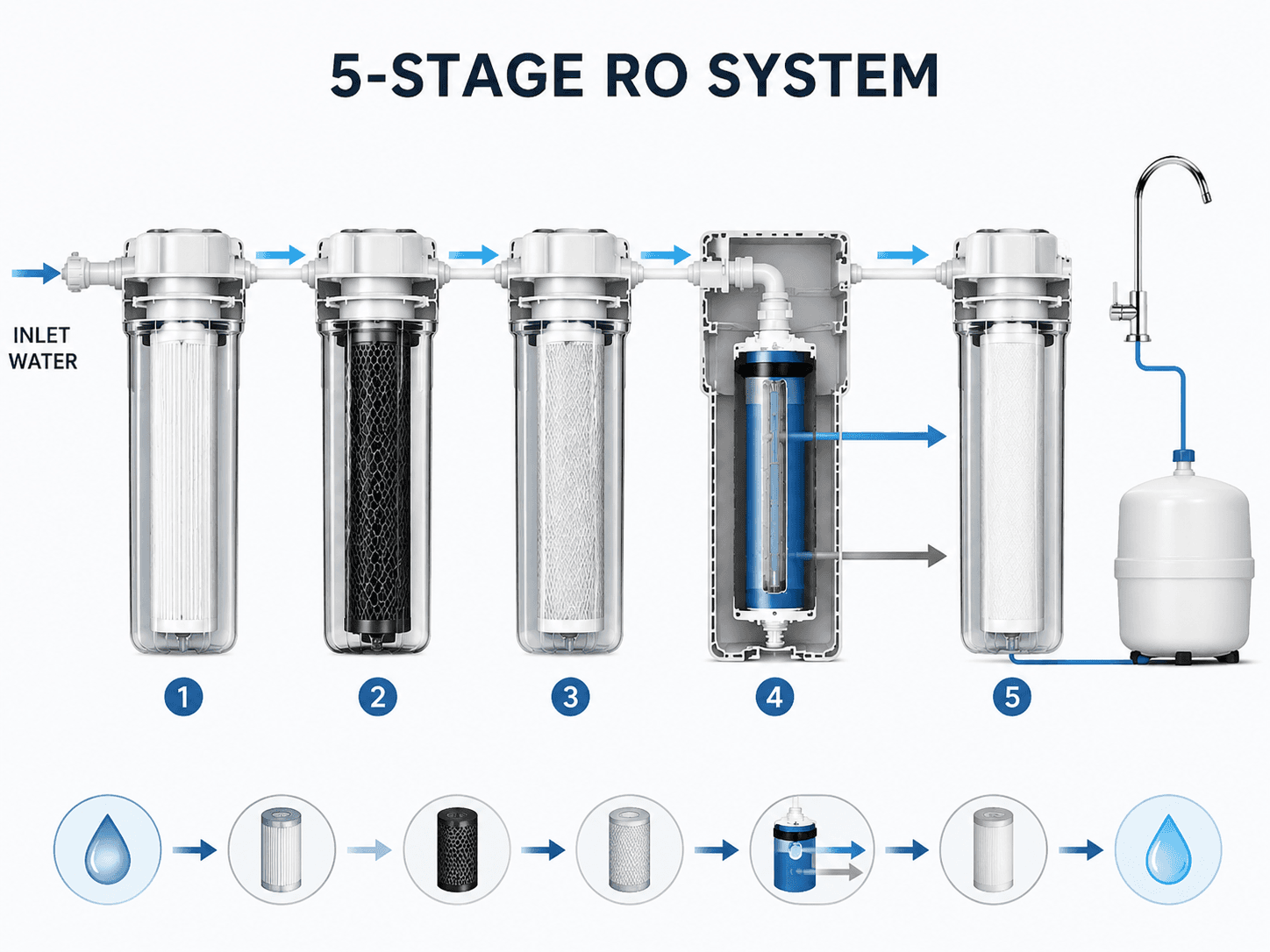
Reverse osmosis reverses that flow. By applying pressure to the more concentrated side, which is your feed water, you push water molecules through the membrane while leaving dissolved solids and contaminants behind. According to the rules of osmosis a system will produce purified water at a rate determined by three main factors. Membrane surface area, feed pressure, and feed water temperature.
This is where spec sheets get tricky. The flow rate and removal rate numbers printed on marketing materials are almost always measured under ideal laboratory conditions. Seventy seven degree feed water, sixty psi pressure, perfect TDS levels. Real homes rarely match those conditions. A ten degree drop in water temperature can reduce flow by ten to fifteen percent. Lower incoming pressure means slower production and slightly lower rejection rates.
NSF ANSI 58, the standard for RO system performance testing, requires a minimum seventy five percent TDS reduction for certified systems. Quality membranes can reach ninety five to ninety eight percent rejection under optimal conditions. But those numbers assume new membranes and ideal feed water. A supplier who promises ninety nine percent rejection across the board is either testing under perfect conditions or stretching the truth.
What Whole House Reverse Osmosis Systems Actually Remove From Water
Independent lab tests under NSF ANSI 58 protocols give a clearer picture of real performance. Lead and arsenic typically see ninety five to ninety nine percent reduction. Fluoride, nitrate, and nitrite usually land in the eighty five to ninety five percent range. Chromium six sees ninety five to ninety nine percent rejection. Even PFAS compounds, the forever chemicals showing up in water supplies worldwide, usually achieve over ninety percent removal when tested with EPA Method 533 or 537.1.
But the details matter. Larger molecules get rejected more effectively than smaller ones. Short chain PFAS compounds, for example, pass through at slightly higher rates than long chain versions. And chlorine is not removed by the membrane at all, which is why every RO system includes pre filters. If a supplier claims their membrane removes chlorine, that is a red flag.
For private label brands, these details directly affect your reputation. If you market a system as removing ninety nine percent of lead and independent testing shows ninety two percent, you face returns, negative reviews, and potential regulatory issues. Reputable OEM partners will give you realistic performance ranges, not best case scenarios presented as typical results.
The Hidden Costs Behind Whole House Reverse Osmosis Systems
The unit cost you see on a quotation is just the start. The real cost of carrying a whole house RO system line includes several factors that many buyers overlook.
Membrane replacement is the biggest ongoing expense. Whole house systems use far more membrane area than point of use units, and replacement costs scale accordingly. Feed water quality directly affects membrane life. High TDS, high chlorine, or heavy sediment can cut membrane life in half. If your supplier quotes a five year membrane life but your market has challenging water quality, you may be looking at two to three years in practice.
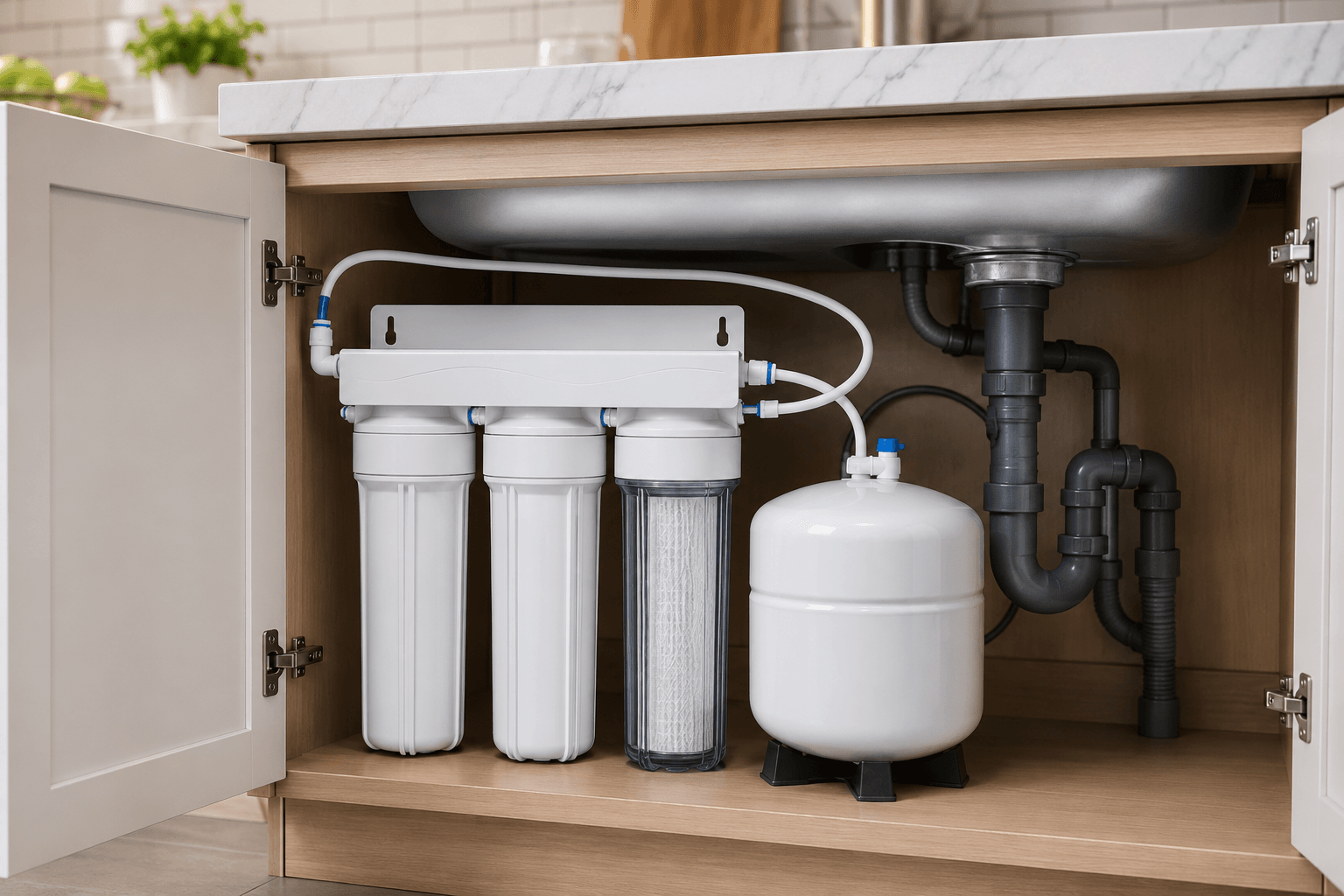
Then there is water waste. RO systems produce a concentrate stream carrying the rejected contaminants. Basic under sink systems might waste three to four gallons for every gallon of purified water. Efficient designs can reach one to one ratios. Whole house systems, with their higher flow demands, often fall on the less efficient end. The EPA WaterSense draft specification requires a minimum thirty percent recovery rate for point of use systems. Many whole house designs struggle to meet even that threshold. For your customers, higher waste means higher water bills and more complaints.
Warranty claims and customer support add another layer. Systems that underperform or fail early cost you money and damage your brand. A slightly higher unit cost from a reliable OEM often saves money in the long run.
Choosing the Right OEM Partner for Whole House Reverse Osmosis Systems
When you evaluate OEM and ODM partners for whole house RO systems, look beyond the price list. The right partner brings engineering expertise, certification support, and quality control that protects your brand.
Start with technical capability. Can the manufacturer design systems for specific flow rates and pressure requirements? Do they understand membrane chemistry and rejection curves? Can they customize configurations for different markets and water conditions? These are the questions that separate assembly shops from real OEM partners.
Certification matters too. NSF ANSI 58 certification requires independent testing and ongoing audits. A manufacturer with certified products and the ability to support new certifications for your private label line saves you time and risk.
Quality control systems, consistent supply chains, and flexible MOQs are also important. And if you carry multiple filtration product lines, working with a single partner who handles both air and water filtration can simplify your sourcing.
HIFINE specializes in custom filtration components and finished products for both air and water applications. We serve private label clients, distributors, and brand owners worldwide with OEM and ODM solutions covering HEPA filters, vacuum cleaner cartridges, air purifier elements, and water filtration components. Our engineering team works directly with clients to develop products that meet real world performance targets, not just spec sheet numbers.
If you are building a product lineup for whole home health, it makes sense to consider both water and air filtration together. Many of our clients find that offering complementary product lines increases average order value and strengthens customer loyalty. Understanding air purifier coverage areas helps you design product bundles that actually work for real homes.
Final Takeaways on Whole House Reverse Osmosis Systems
Whole house reverse osmosis systems are not magic boxes. They are engineering products bounded by physical laws. According to the rules of osmosis a system will perform within a predictable range based on membrane quality, feed conditions, and system design. The best OEM partners understand these limits and design products that deliver consistent real world performance.
When you source for your private label or distribution business, look for partners who give you honest numbers, solid engineering, and reliable support. The cheapest unit on the quotation rarely ends up being the cheapest product to carry.